BHRC BLOG
KPV Peptide Dosage Guide: Complete Protocol for Safe Administration

KPV Peptide Dosage Guide: Complete Protocol for Safe Administration
Three amino acids — lysine, proline, and valine — make up one of the most talked-about anti-inflammatory peptides in modern wellness medicine. Here’s how KPV is actually dosed, and how to do it safely under medical supervision.

1 · The Basics
What Is KPV, Really?
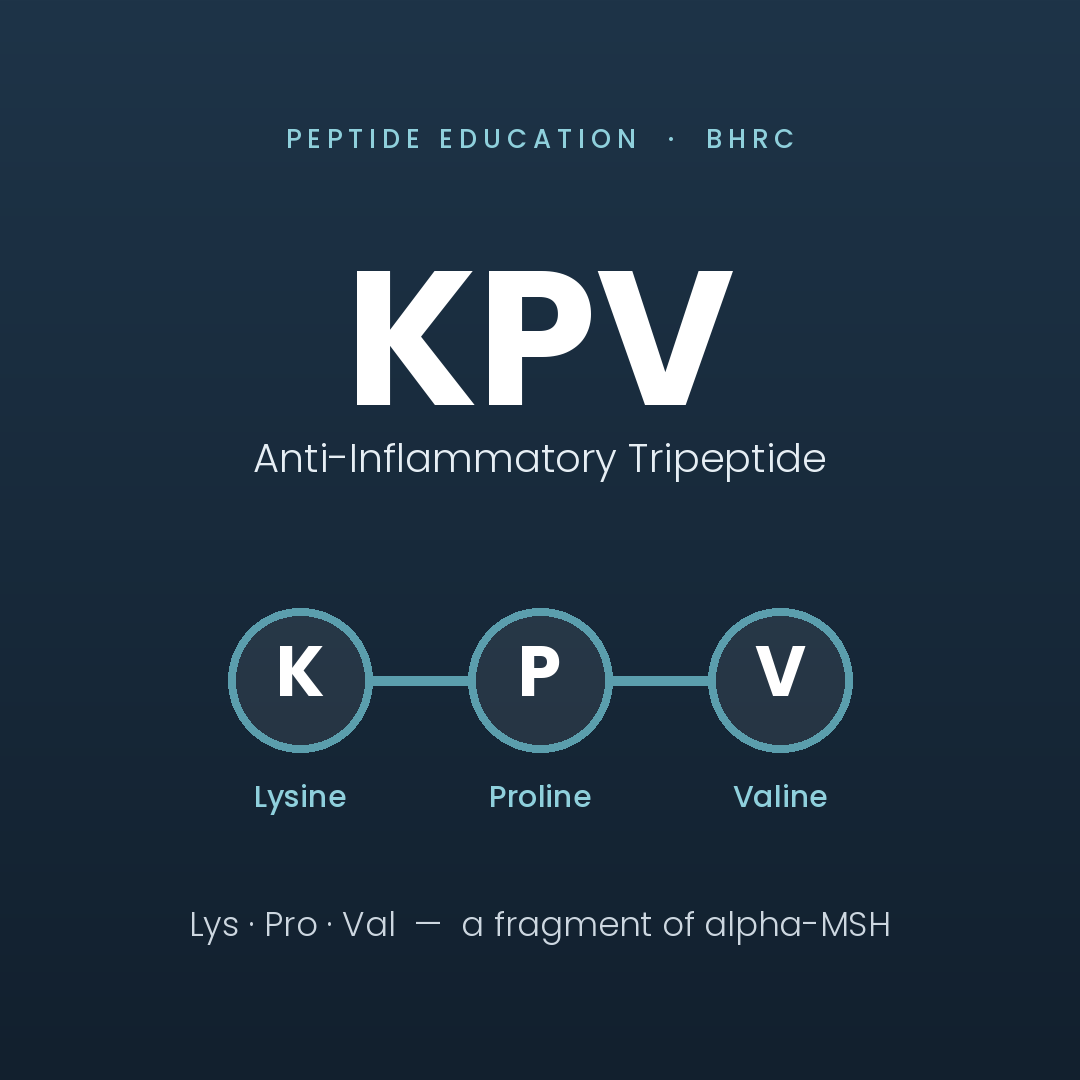
KPV (Lys-Pro-Val) is a naturally occurring tripeptide that corresponds to positions 11–13 — the C-terminal tail — of alpha-melanocyte-stimulating hormone (α-MSH), a 13-amino-acid neuropeptide your pituitary gland and peripheral tissues produce every day.
Here’s the clever part: α-MSH is a potent anti-inflammatory hormone, but it also affects skin pigmentation. KPV keeps the anti-inflammatory punch while dropping the pigmentation effects — like keeping the engine of a sports car and leaving behind the parts you didn’t want.
“The C-terminal MSH peptide KPV exhibits an anti-inflammatory effect that is clearly different from that of the core MSH peptides.”— PubMed
Why people are interested in KPV
- ✓Calming systemic and localized inflammation
- ✓Supporting gut lining health (a favorite in IBD-focused research)
- ✓Skin conditions — dermatitis, acne, wound healing
- ✓Immune modulation without broad immune suppression
2 · The Science
How KPV Works (The 30-Second Version)
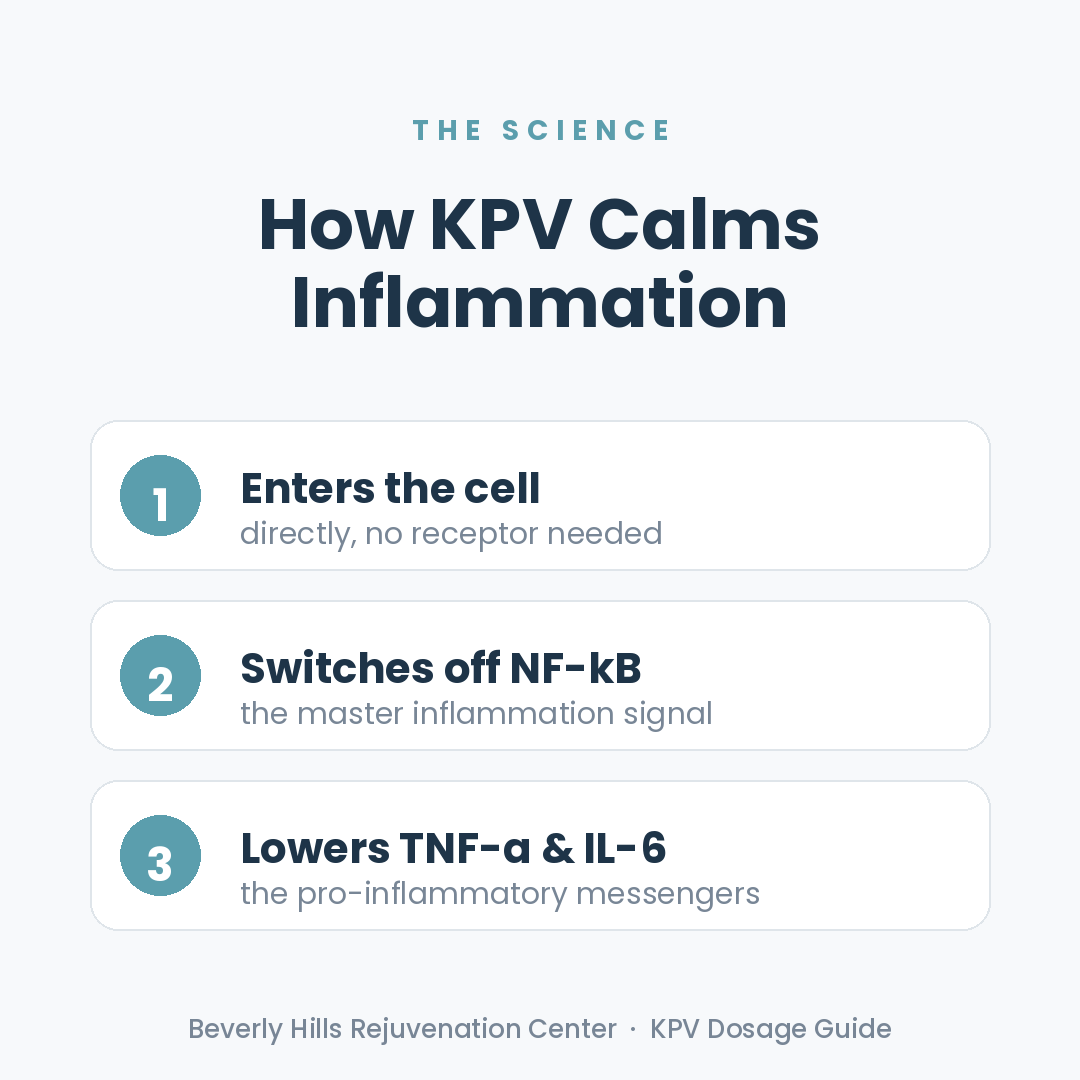
Inflammation is largely orchestrated by a master switch inside your cells called NF-κB (nuclear factor kappa B). Flip it on, and your body cranks out pro-inflammatory messengers like TNF-α and IL-6. Leave it stuck “on,” and you get chronic inflammation.
KPV essentially walks up to that switch and turns the volume down. It:
- Enters cells directly and inhibits IκB kinase, blocking NF-κB from translocating to the nucleus.
- Reduces pro-inflammatory cytokines (TNF-α, IL-6, IL-1β).
- Uses the PepT1 transporter — a di/tripeptide “doorway” especially concentrated in inflamed intestinal tissue, which is why oral KPV is so interesting for gut health.
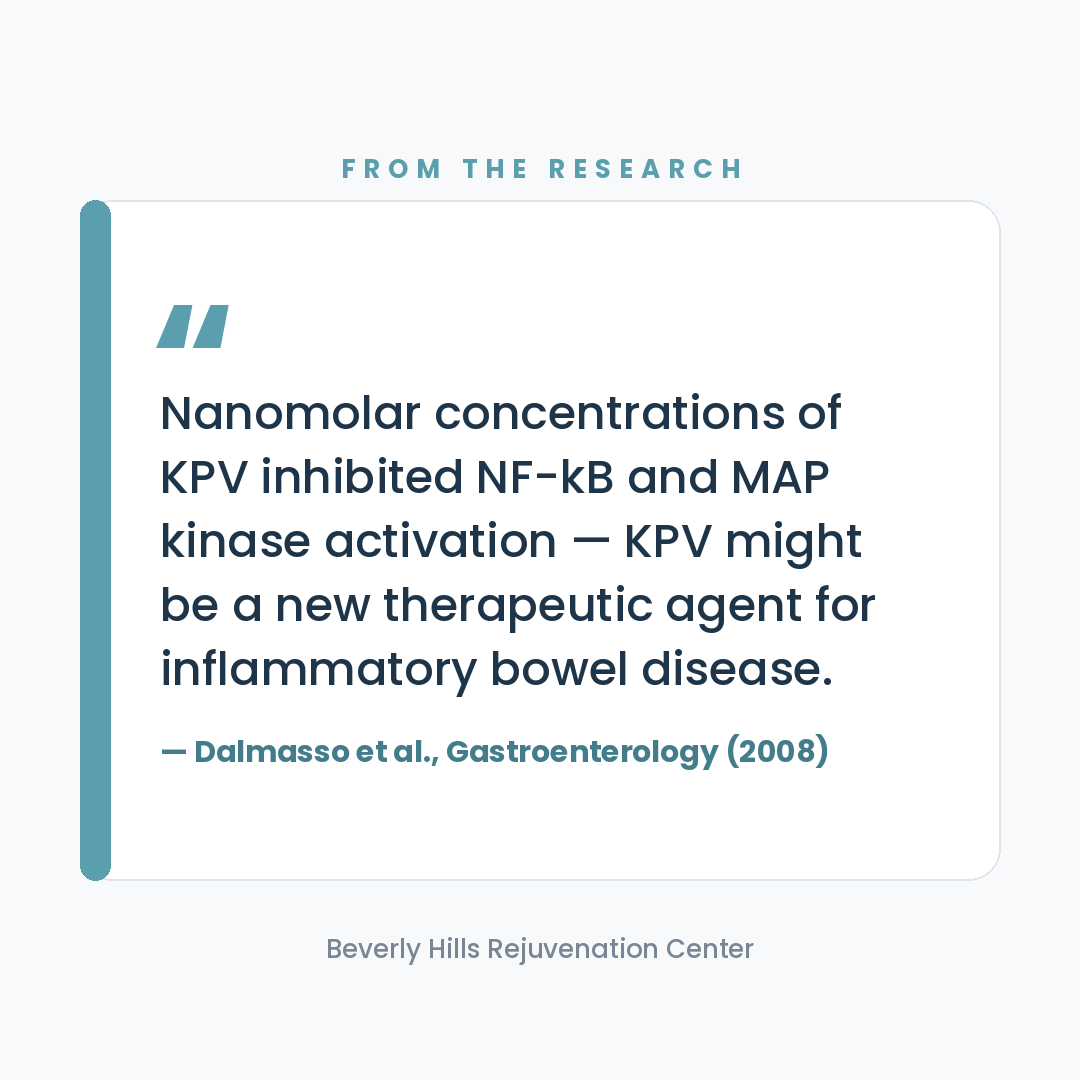
Separate work confirmed the closely related GKPV fragment inhibits TNF-α-stimulated NF-κB activity, and broader reviews document its anti-inflammatory reach “beyond the pharmacophore.” Translation: small peptide, big anti-inflammatory reputation.

3 · Dosage by Route
KPV Dosage by Route of Administration
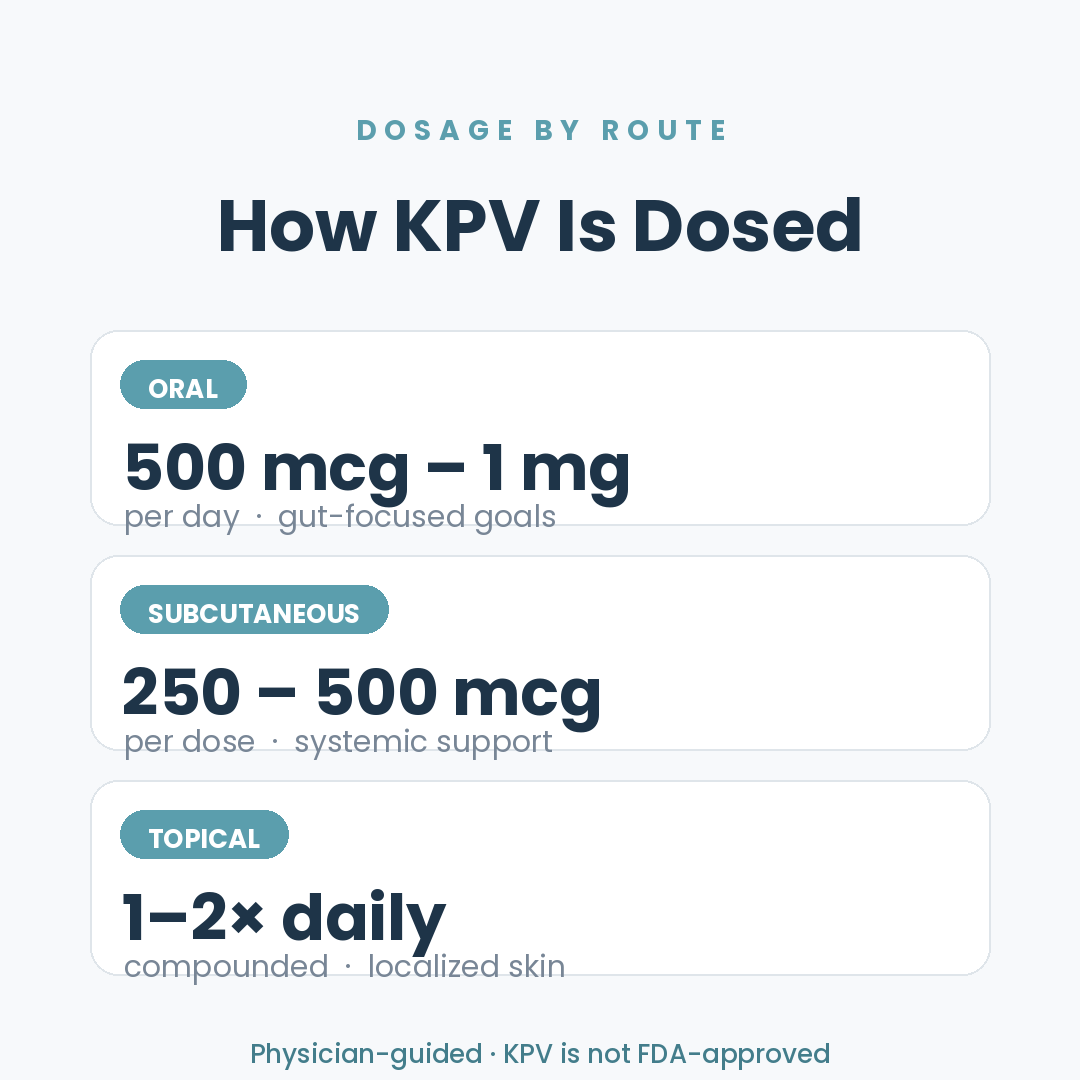
KPV is referenced across three routes — oral, subcutaneous (injection), and topical — and the “right” dose depends heavily on your goal and, above all, on what your prescribing physician determines is appropriate for you.
Gut-Focused Goals
Favored for GI health (PepT1 uptake concentrates in inflamed intestine). Usually on an empty stomach; many start ~200 mcg in week 1 to assess tolerance.
Systemic Inflammation
For whole-body anti-inflammatory goals. Often once daily or 2–3×/week depending on protocol, with rotated injection sites.
Localized Skin
Compounded creams or serums applied to the affected area for dermatitis, acne, or wound sites — targeted, with minimal systemic exposure.
| Route | Common Referenced Range | Best For | Notes |
|---|---|---|---|
| Oral | 500 mcg – 1 mg daily | Gut & GI health | Empty stomach; PepT1 uptake |
| Subcutaneous | 250 – 500 mcg per dose | Systemic inflammation | Rotate injection sites |
| Topical | Compounded, 1–2× daily | Skin & localized issues | Minimal systemic exposure |

4 · Cycling
How Long Should You Run KPV?
Because long-term human data on KPV is still limited, most referenced protocols are conservative and time-boxed rather than indefinite:
- Cycle length: commonly ~8 weeks on, followed by a break.
- Weekly pattern: some protocols use a 5-days-on / 2-days-off rhythm.
- Reassess: the break is your cue to check in with your provider, evaluate results, and decide whether to continue.
Think of it like training — you don’t max out every single day forever. You cycle, you recover, you reassess.
5 · Safety
Safety, Side Effects & Who Should Be Cautious
KPV is generally described as well-tolerated in the available research, but “well-tolerated” is not the same as “risk-free.”
Possible / reported considerations
- ✓Injection-site redness, itching, or irritation (subcutaneous route)
- ✓Mild GI changes (oral route)
- ✓Allergic-type reactions (rare)
- ✓Unknown long-term effects, given the limited human trial data
Extra caution warranted for
- ✓Anyone pregnant or breastfeeding
- ✓People with active cancer or a significant cancer history (discuss with your oncologist)
- ✓Those on immunomodulating medications
- ✓Anyone with known peptide allergies
The single most important safety factor isn’t a number on a vial — it’s medical supervision. Sourcing, sterility, dosing accuracy, and interaction checks all matter, and a compounding-pharmacy-backed clinic exists precisely to handle those variables for you.

6 · Safe Administration
Why “Safe Administration” Starts With Sourcing
Here’s an uncomfortable truth about the peptide space: a huge portion of KPV sold online is labeled “for research use only, not for human consumption.” That labeling exists for a reason — purity, sterility, and accurate dosing are wildly inconsistent across gray-market vendors.
Safe administration means:
- Physician-prescribed product from a licensed compounding pharmacy.
- Verified purity and sterility — no mystery vials.
- A dosing protocol matched to you — your goals, labs, and history — not a copy-pasted forum stack.
- Ongoing monitoring so the protocol can be adjusted.

FAQ
Frequently Asked Questions
What is the typical KPV peptide dosage?+
Commonly referenced ranges are roughly 500 mcg–1 mg daily orally, 250–500 mcg per dose subcutaneously, and compounded topical formulations applied 1–2 times daily. Your actual dose should be set by a prescribing physician, as KPV is not FDA-approved and has no officially established human dose.
Is KPV taken orally or by injection?+
Both — plus topical. Oral is favored for gut-focused goals (thanks to PepT1 uptake in the intestine), subcutaneous injection for systemic anti-inflammatory goals, and topical formulations for localized skin concerns.
How long does it take KPV to work?+
This varies by individual and goal. Some people report changes within a few weeks, but because human data is limited, timelines aren’t standardized. Cycling protocols commonly run around 8 weeks before reassessing.
Is KPV safe?+
It’s generally described as well-tolerated in available research, but long-term human data is limited and it is not FDA-approved. Safety depends heavily on pharmaceutical-grade sourcing, accurate dosing, and medical supervision.
Keep Reading
Related Resources & Guides
KPV & Peptide Therapy by Location
Sources
References & Further Reading
- Dalmasso G, Charrier-Hisamuddin L, Nguyen HTT, Yan Y, Sitaraman S, Merlin D. PepT1-Mediated Tripeptide KPV Uptake Reduces Intestinal Inflammation. Gastroenterology. 2008;134(1):166–178. PMID: 18061177. gastrojournal.org
- Dissection of the anti-inflammatory effect of the core and C-terminal (KPV) alpha-melanocyte-stimulating hormone peptides. PubMed. PMID: 12750433. pubmed.ncbi.nlm.nih.gov (verify full citation formatting before publication)
- Immobilized α-melanocyte stimulating hormone 10–13 (GKPV) inhibits tumor necrosis factor-α stimulated NF-κB activity. Biochem Biophys Res Commun. 2005. sciencedirect.com
- Terminal Signal: Anti-Inflammatory Effects of α-MSH Related Peptides Beyond the Pharmacophore. Adv Exp Med Biol (Springer). link.springer.com
- U.S. Food & Drug Administration. Compounding and the FDA: evaluation of bulk drug substances. fda.gov