BHRC BLOG
What Are Peptides? A Beginner’s Guide to Peptide Therapy
Peptides are one of the most talked-about topics in regenerative medicine right now — and one of the most misunderstood. If you’ve heard the term but aren’t sure what it means, you’re not alone. This guide covers the basics: what peptides actually are, what they do in your body, how peptide therapy works clinically, and how to know if it’s something worth exploring for your own health goals.
At Beverly Hills Rejuvenation Center, we’ve offered physician-supervised peptide therapy across our locations for years. We work with over 50 peptide compounds — each with a specific mechanism, target, and application. This guide reflects what we tell our patients in their first consultation.
What Are Peptides — and Why Does Everyone Suddenly Know About Them?
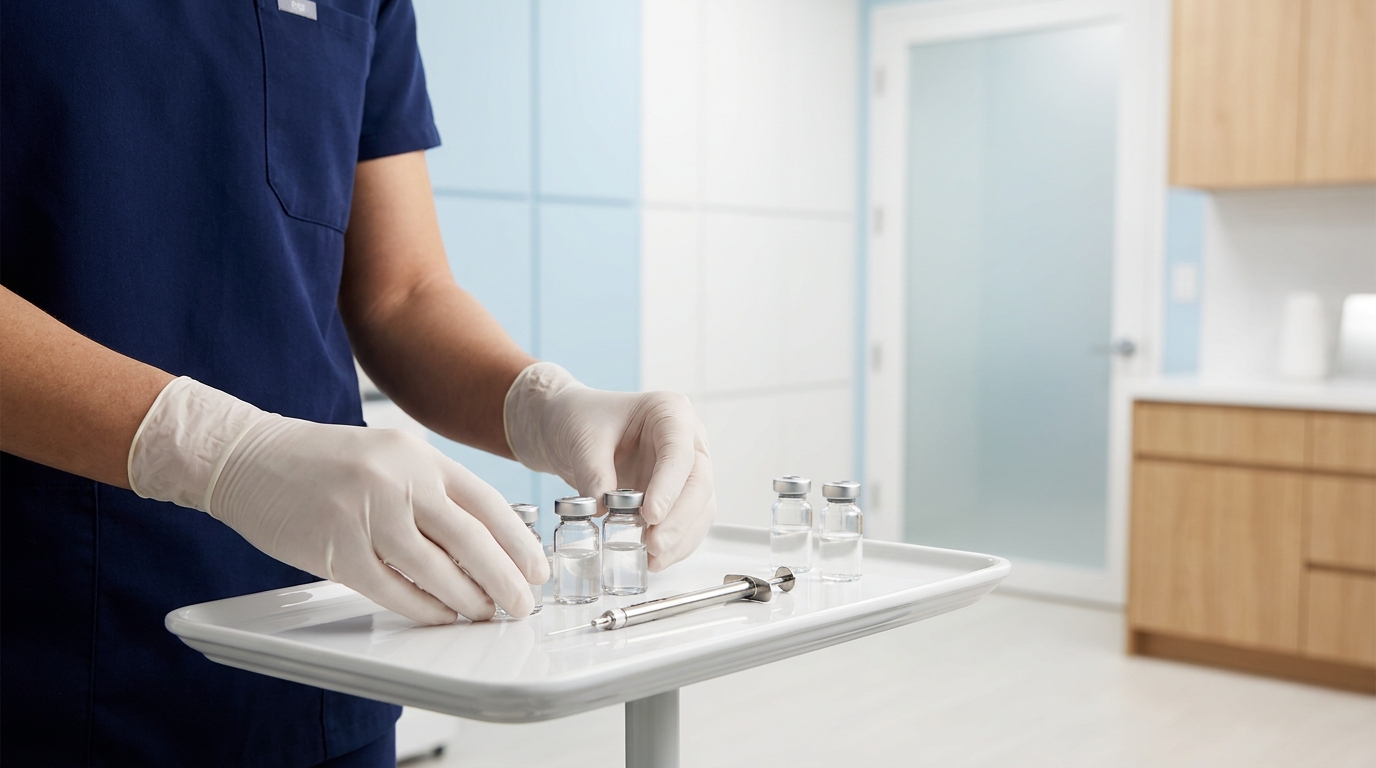
Peptides are short chains of amino acids — the same building blocks that make up proteins. Your body produces thousands of them naturally. They function as signaling molecules: they travel to specific cells, tissues, and organs and deliver instructions — produce more collagen, release growth hormone, accelerate healing, reduce inflammation, regulate appetite.
The reason you’re hearing about them now is a combination of three things: the explosion of GLP-1 drugs like semaglutide and tirzepatide for weight loss brought mainstream attention to the peptide category; the biohacking and longevity community has made compounds like BPC-157 and GHK-Cu household names; and compounding pharmacy regulations have made physician-prescribed peptides more accessible than ever before.
US Google searches for peptide-related terms topped 10.1 million per month in early 2026 — growing between 400% and 1,000% year-over-year for certain queries. This is not a wellness trend. It’s a fundamental shift in how medicine thinks about aging, recovery, and metabolic health.
Peptide Therapy at a Glance
- Peptides are short amino acid chains that act as signaling molecules in your body
- Therapeutic peptides are bioidentical — structurally identical to peptides your body already makes
- BHRC offers 50+ peptide compounds across weight loss, anti-aging, recovery, hormones, and sexual health
- All protocols are physician-prescribed and sourced from FDA-registered compounding pharmacies
- Most are self-administered via small subcutaneous injections at home
- A free physician consultation is required before any prescription is written
How Peptides Work in Your Body
The simplest way to understand peptide therapy is this: your body already uses peptides to regulate almost everything. As you age, your natural peptide production declines — growth hormone output drops, collagen-signaling peptides decrease, healing and repair slow down. Peptide therapy works by supplementing or restoring specific signals your body has reduced producing on its own.
This is fundamentally different from how most drugs work. A conventional drug typically blocks or overrides a pathway — suppress this receptor, inhibit that enzyme. A therapeutic peptide typically supports an existing pathway — stimulate this production, accelerate this repair process. Because peptides are bioidentical and specific, they tend to produce targeted effects with fewer systemic side effects than broad-spectrum drugs.
Different peptides target different pathways. A growth hormone-releasing peptide tells your pituitary gland to secrete more of your own growth hormone. BPC-157 activates pathways involved in angiogenesis and tissue repair. GLP-1 receptor agonists signal the gut and brain to regulate appetite and insulin response. GHK-Cu activates genes associated with collagen synthesis and wound healing. Each peptide has a distinct mechanism and a specific clinical application.
Curious which peptides make sense for your goals?
Free physician consultation at BHRC — in person or virtual. We build your protocol around your labs and health history.
The Main Categories of Peptide Therapy
Not all peptides do the same thing. Here are the six main clinical categories BHRC works with, and the most commonly prescribed compounds within each:
Category 01
Weight Loss & Metabolic Optimization
GLP-1 receptor agonists suppress appetite, regulate blood sugar, slow gastric emptying, and drive meaningful fat loss — especially visceral fat. These are the highest-searched peptides in 2026 by a significant margin.
Key compounds: Semaglutide, Tirzepatide, AOD-9604, CJC-1295
Category 02
Growth Hormone & Body Composition
Growth hormone-releasing peptides stimulate your pituitary gland to produce more of your own growth hormone — increasing lean muscle, reducing fat, improving sleep and recovery without synthetic GH.
Key compounds: Sermorelin, CJC-1295, Ipamorelin, Tesamorelin
Category 03
Healing, Recovery & Inflammation
Tissue repair peptides accelerate recovery from injury, surgery, or intense training. BPC-157 — the most searched non-weight-loss peptide at 165K searches per month — is the flagship compound in this category.
Key compounds: BPC-157, TB-500, Thymosin Alpha-1, KPV
Category 04
Anti-Aging & Skin Quality
Collagen-stimulating and skin-signaling peptides activate genes associated with skin repair and structural protein production. GHK-Cu saw over 1,000% search growth year-over-year in 2026.
Key compounds: GHK-Cu, Epithalon, Snap-8, Leuphasyl
Category 05
Sexual Health & Libido
Melanocortin receptor agonists work through the central nervous system to increase sexual arousal and function in both men and women — without the cardiovascular risks of traditional medications.
Key compounds: PT-141 (Bremelanotide), Kisspeptin
Category 06
Cognitive Performance & Sleep
Nootropic peptides and sleep-enhancing compounds support focus, memory consolidation, and deep sleep architecture — particularly valuable in patients with declining growth hormone output.
Key compounds: Selank, Semax, Delta Sleep-Inducing Peptide (DSIP)
Your First BHRC Peptide Consultation — What Actually Happens
Peptide therapy at BHRC is not walk-in. Every patient starts with a complimentary physician consultation — a licensed medical provider who reviews your health history, symptoms, and goals before recommending any compound.
- Consultation (complimentary): 30-45 minutes with your BHRC provider. You discuss goals, symptoms, medical history, and current medications.
- Lab work: Depending on your goals, we order baseline labs — hormone panels, metabolic markers, inflammatory markers. Peptides are prescribed based on data, not guesswork.
- Protocol design: Your provider designs a personalized protocol — specific compounds, doses, timing, and delivery method. You receive a written plan.
- Training and dispensing: If self-injecting, you receive a brief training session. Peptides are sourced from an FDA-registered compounding pharmacy and dispensed with full labeling.
- Follow-up: Most protocols include a 4-6 week check-in to assess response, adjust dosing, and review any monitored labs.
Ready to explore peptide therapy at BHRC?
Free in-person or virtual physician consultation — no obligation. We’ll review your goals and build a protocol based on your labs.
Are Peptides Safe — and Are They Legal?
Safety
Physician-supervised peptide therapy has a strong clinical safety profile. Because most therapeutic peptides are bioidentical to compounds your body already produces, they tend to work with your physiology rather than against it. The most commonly reported side effects are localized: minor redness or swelling at the injection site, which typically resolves within hours.
The key distinction is supervised vs. unsupervised use. Peptides obtained from research chemical suppliers without medical oversight carry meaningful risks: inconsistent purity, no dosing guidance, no monitoring of biomarkers that may shift during treatment. At BHRC, every protocol is supervised, labs are ordered before and during treatment, and your provider is reachable throughout.
Legal Status in 2026
As of 2026, several key peptides — including BPC-157, TB-500, CJC-1295, and Ipamorelin — returned to Category 1 compounding status following regulatory review. This means licensed compounding pharmacies can legally prepare and dispense them under physician prescription in the United States. BHRC sources all peptides exclusively from FDA-registered 503A and 503B compounding pharmacies.
How Much Does Peptide Therapy Cost at BHRC?
- Single-compound protocols (e.g., sermorelin, BPC-157): Starting around $150-$400/month
- GLP-1 weight loss protocols (semaglutide, tirzepatide): Pricing varies by dose — free consultation includes full breakdown
- Combination stacks (e.g., CJC-1295 + Ipamorelin + BPC-157): $400-$900/month depending on compounds
- VIP Members receive 15% off all peptide protocols
Your free consultation includes a written protocol with a full cost estimate. No obligation to proceed.
Start Your Free Peptide Consultation
Talk to a BHRC physician about your goals — in person or virtually. We’ll review your health history, recommend the right compounds, and build a personalized protocol — at no cost to you.
Book Free Consultation — In Person or VirtualPeptide therapy available at all BHRC locations nationwide · Virtual consultations available everywhere
Frequently Asked Questions
What are peptides?
Peptides are short chains of amino acids that act as signaling molecules in the body — communicating with cells and organs to regulate collagen production, hormone release, fat metabolism, tissue repair, and immune function. Therapeutic peptides are bioidentical to what your body already produces.
What is peptide therapy used for?
Weight loss and metabolic optimization, anti-aging and skin quality, muscle growth and athletic recovery, hormone regulation, sexual health, gut healing, and cognitive performance. The specific protocol depends on your goals and lab results.
Are peptides the same as steroids?
No. Anabolic steroids synthetically replace your body’s hormone production — often permanently suppressing your own output. Peptides are signaling molecules that work with your existing physiology to stimulate natural production.
Is peptide therapy safe?
When prescribed and monitored by a licensed medical provider, peptide therapy has a strong safety profile. The most common side effects are mild and localized (injection site redness). At BHRC, every protocol includes baseline labs and ongoing monitoring.
How are peptides administered?
Most are administered via small subcutaneous injections using an insulin-style syringe — many patients self-inject at home. Some are available in sublingual or nasal spray form. Your provider will recommend the best delivery method for your protocol.
How much does peptide therapy cost at BHRC?
Single-compound protocols start around $150-$400/month. Comprehensive stacks range from $400-$900/month. VIP Members receive 15% off. Your free consultation includes a full cost breakdown.
Are peptides legal?
Yes, when prescribed by a licensed physician. BPC-157, TB-500, CJC-1295, and Ipamorelin are legal for licensed compounding pharmacies under physician prescription. BHRC sources all peptides from FDA-registered compounding pharmacies.
How long until I see results?
GLP-1 weight loss peptides show appetite changes within 1-2 weeks. BPC-157 works within 2-4 weeks. Growth hormone peptides require 2-3 months for body composition changes. GHK-Cu shows skin improvements in 6-8 weeks.
2 FDA Compounding Policy: Category 1 peptide reclassification, February 2026.
3 Lim et al. Therapeutic applications of peptides in clinical medicine. Frontiers in Aging, 2026.
READ NEXT
BPC-157 Benefits: What the Research Actually Says
BPC-157 is the most-searched non-weight-loss peptide at 165K searches/month. Here’s what the clinical literature says about its applications — and what to expect at BHRC.
ALSO READ
Semaglutide vs. Tirzepatide: Which Is Right for You?
The two biggest GLP-1 peptides compared head-to-head — clinical trial data, who belongs on each protocol, and how BHRC approaches the decision.
Ready to Start?
Get Your Personalized Peptide Protocol
BHRC offers physician-supervised peptide programs at our West Hollywood and West Los Angeles clinics. Free consultation — no commitment required.
Book a Free Consultation →