
Nurse Practitioner
Megan Lafuente
West Hollywood
What Megan does
- Neurotoxins
- Dermal filler
- Hormone therapy
- Peptide protocols
- Medical weight management
- Lab work review
Hormones
Perimenopause starts years before periods stop, and being told your labs are normal is not the same as being told nothing is wrong.
$550
Hormones, thyroid and metabolic markers
New clients save 15% on your first treatment.
Hormone therapy starts at $550 and what you pay depends on which hormones you need and how they are delivered. Pellets are quoted separately after labs. The consultation is complimentary, and it includes the conversation most women say they have never actually been given.
Financing available
Pay over time with the same providers we use in studio. Checking your options does not affect your credit score.





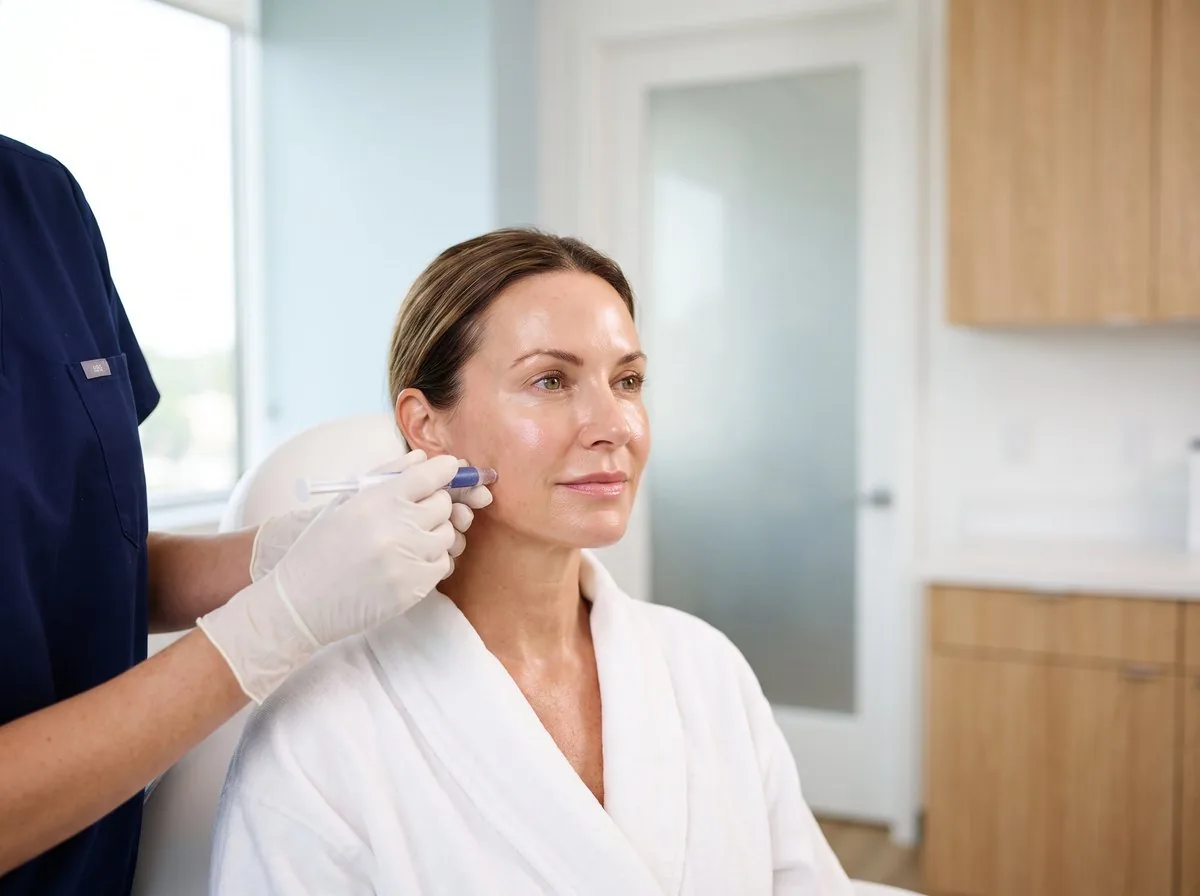
Menopause and perimenopause care · Hot flashes
In short
Menopause and perimenopause care at BHRC begins with a full hormone panel and a proper conversation about symptoms, then treatment matched to what is found. That may be hormone therapy from $550, delivered as creams, injections or BioTE pellets, alongside thyroid and metabolic testing, because those are frequently mistaken for menopause. Perimenopause commonly begins in the early forties, years before periods stop, and is where most women are dismissed.
Menopause is a single day: twelve months after your last period. Perimenopause is the four to ten years leading up to it, and it is where almost all the symptoms live. It commonly starts in the early forties and sometimes the late thirties, while periods are still regular, which is exactly why it gets missed. Hormones fluctuate wildly rather than simply declining, so a single blood test taken on the wrong day can come back entirely normal while you are not sleeping, your mood has changed, your joints ache and your body composition has shifted without you changing anything. Being told your labs are normal is not the same as being told nothing is wrong, and the gap between those two sentences is most of what this page exists to close.

Units and cost
Priced by therapy, not by symptom.
| Area | Typical units | Cost |
|---|---|---|
| Hormone therapy | Estradiol, progesterone, testosterone | from $550 |
| BioTE pellets | Every 4 to 5 months | Call for pricing |
| Full hormone panel | With the consultation | from $550 |
| Thyroid panel | Because it mimics menopause | See thyroid therapy |
| Metabolic markers | HbA1c and insulin | See blood panels |
| Weight changes | Where metabolism has shifted | See weight loss |
| Hair thinning | Ferritin, thyroid and androgens | See hair restoration |
| Vaginal and urinary symptoms | Discussed at consultation | from $550 |
Vaginal dryness, urinary urgency and painful sex are extremely common and almost never raised, usually because nobody asked. We ask. There are effective treatments and they are not the same as systemic hormone therapy.
Treatment areas
Hot flashes
from $550
One of the most treatable.

Sleep
from $550
Often the first thing to improve.
Mood
from $550
Frequently dismissed as stress.

Brain fog
from $550
Real, common and frightening.

Body composition
from $550
Weight moving to the middle.

Full hormone panel
included
Wider than hormones alone.
How it works
Rule things out, then treat what is actually there.
The consultation starts with symptoms and timeline rather than with a lab slip. What changed, when, and in what order tells a physician more about perimenopause than a single oestradiol reading does, because levels fluctuate day to day at this stage.
Then a full panel, and deliberately wider than hormones alone. An underactive thyroid, low ferritin and insulin resistance all produce fatigue, weight change, mood change and hair thinning that look exactly like perimenopause and are treated completely differently. Missing one of those means treating the wrong thing for a year.
If hormone therapy is appropriate, it is matched to you: which hormones, what dose, and which delivery method. Estradiol, progesterone where the uterus is intact, and often testosterone, which is routinely overlooked in women despite being relevant to energy, mood and libido.
Then follow-up and adjustment. The first dose is a starting point, not an answer, and repeat labs at six to twelve weeks are what turn it into the right one.
Which product
We offer all three, so the choice can be yours.

Starts working: Daily. Lasts: Adjustable immediately. Easy to adjust, easy to stop, and generally the gentlest way to start. Requires daily consistency and carries a transfer risk to partners and children through skin contact.
Starts working: Weekly or twice weekly. Lasts: Fully adjustable. Precise control over dose and easy to change. Requires self-injection, and some women feel the dip before the next dose.
Starts working: Every 4 to 5 months. Lasts: Steady, not adjustable. Nothing to remember and steady levels without peaks and troughs. ⚠️ The trade-off is real: once a pellet is in, the dose cannot be changed until it wears off, which can mean months.
Starts working: n/a. Lasts: n/a. Whether hormone therapy is right for you depends on your personal and family history, your age, and how long since menopause you are starting. The evidence here has been revised substantially over the past two decades, and it is genuinely individual. Anyone giving you a blanket yes or no on a web page, in either direction, is not giving you medical advice. Bring your history and we will go through it properly.
Good to know
Including the symptoms nobody brings up unprompted.

Frequently the first thing to improve, and the one that makes everything else more manageable.
The symptom everyone knows about, and one of the most treatable.
Often dismissed as stress. The timing usually tells you otherwise.
Real, common and frightening, because it gets mistaken for something worse.
Including vaginal dryness and painful sex. Rarely raised, very treatable, and we will ask.
Weight redistributing to the middle despite no change in diet or training.
Thyroid disease, anaemia and insulin resistance mimic all of the above. We test for them first rather than assuming.
Aftercare
It is an adjustment process, not a single prescription.

Sleep and hot flashes often shift first. Mood usually follows.
Repeat labs and the first real adjustment. The starting dose is rarely the final one.
Where most women say they feel like themselves again. Body composition changes are slower than symptom changes.
Breast tenderness, spotting and bloating are common early and usually settle or respond to a dose change. Tell us rather than stopping.
Review at least annually, with labs. Needs change over time.
Resistance training and protein matter more in this decade than any other, for bone and muscle. We will say so.
Discuss it rather than just stopping. There are better and worse ways to come off.
Is it for you
Most women who come to us have been told their labs are normal and sent away, and are still not sleeping.
None of these are automatic exclusions and several are nuanced. Bring your history and a physician will go through the risks and benefits with you individually.
Your timeline
The consultation is the part most women say they never got.
Frequently asked
Usually by pattern rather than by a single test. Perimenopause commonly begins in the early forties, sometimes the late thirties, while periods are still regular. Typical changes include disrupted sleep, mood shifts, brain fog, joint aches, changes in cycle length or flow, and weight moving to the middle without a change in diet. Hormones fluctuate rather than simply falling at this stage, so one blood test on the wrong day can look completely normal.
That is the single most common thing we hear, and it is worth understanding why it happens. In perimenopause, oestradiol swings substantially from day to day, so a single reading can genuinely land in the normal range while you feel terrible. A normal result rules some things in and out; it does not rule out perimenopause. It is also why we test thyroid, ferritin and metabolic markers at the same time, since those mimic it closely and are treated differently.
It depends on you, and any page that answers this with a flat yes or no is not being straight with you. Risk and benefit vary with your personal and family history, your age, how long since menopause you are starting, and which hormones by which route. The evidence has been substantially revised over the past two decades, particularly around timing of initiation. Bring your history to the consultation and a physician will go through it with you properly.
Hormone therapy starts at $550, and what you pay depends on which hormones you need and how they are delivered. BioTE pellets are quoted separately after blood work. The consultation is complimentary.
It is worth discussing, and it is routinely overlooked. Women produce testosterone too and levels decline with age. It is relevant to energy, mood, muscle maintenance and libido, and it is a normal part of how we approach hormone therapy for women rather than an afterthought.
Extremely common, and almost never raised, usually because nobody asks. We ask. There are effective treatments, and importantly they are not the same as systemic hormone therapy, so this is worth addressing even if you decide against systemic treatment.
All three work, and the honest answer is that it depends on what you value. Creams and injections are adjustable and easy to stop. Pellets mean nothing to remember and steady levels, but the dose cannot be changed once inserted. If you are new to hormone therapy we usually suggest starting on something adjustable and moving to pellets later if you want the convenience.
Not directly, and we are not going to pretend otherwise. It can help with the things that make weight harder to manage, such as sleep, energy and muscle maintenance. If weight is the primary concern, metabolic testing and a medical weight loss programme are the more honest route, and thyroid and insulin resistance are worth ruling out first.
Enhance your results
What pairs well with neurotoxin.

The full detail on hormone replacement therapy, from $550, including all three delivery methods.
Learn More
The low-maintenance delivery method, inserted every four to five months.
Learn More
Thyroid disease mimics perimenopause closely and is treated completely differently.
Learn More
If you are not sure which of this applies to you, start here.
Learn MoreOur team
The molecule is the same everywhere. Who holds the syringe is not.
Nurse Practitioner
West Hollywood
What Megan does
It starts years before periods stop and it is where most women get dismissed. Regular periods do not rule it out.
Thyroid, ferritin and metabolic markers, because all three mimic perimenopause and treating the wrong one costs you a year.
Vaginal dryness, urinary changes and painful sex are common, treatable and almost never volunteered. So we raise them.
Women produce it too and it is routinely overlooked. It matters for energy, mood and libido.
Creams, injections and pellets, so the choice can be about what suits your life rather than what we happen to offer.
It is individual and it depends on your history and your timing. We will go through it with you rather than give you a blanket answer in either direction.
Find a studio
Available at all 22 studios. Pick your closest for directions, hours and local pricing.
West Hollywood, CA
8550 Santa Monica Blvd, Ste 101
West Hollywood, CA 90069
Westlake Village, CA
968 South Westlake Blvd, Ste 10
Westlake Village, CA 91361
Las Vegas, NV
1825 Festival Plaza Dr, Ste 180
Las Vegas, NV 89135
Henderson, NV
120 S Green Valley Pkwy, Ste 174
Henderson, NV 89012
Bee Cave, TX
3944 Ranch Rd 620 S, Bldg 1, Ste 100
Bee Cave, TX 78738
San Antonio, TX
23110 W Interstate 10 Frontage Rd, Ste 203
San Antonio, TX 78257
Tell us what you are considering and where, and a provider will be in touch.
"*" indicates required fields
Start your journey
Schedule your complimentary consultation. We will go through your symptoms properly, run a panel wider than hormones alone, and tell you honestly what is treatable and what is not.
Medically reviewed by the BHRC clinical team. Last reviewed August 2026.
This page is for general information and is not medical advice. Treatment suitability, pricing and results vary by individual and are confirmed at consultation with a licensed provider.