
Nurse Practitioner
Megan Lafuente
West Hollywood
What Megan does
- Neurotoxins
- Dermal filler
- Hormone therapy
- Peptide protocols
- Medical weight management
- Lab work review
Hormones
Pellets trade control for convenience. That is a genuinely good deal for some people and a bad one for others, and this page says which.
Call for pricing
Blood work first, always
New clients save 15% on your first treatment.
Pellet cost depends on the hormone, the dose and how many pellets your labs indicate, which is not known until after blood work. Call your nearest center for current pricing. Worth comparing on annual cost rather than per-insertion: three to four insertions a year against the cost of injections or creams over the same period.
Financing available
Pay over time with the same providers we use in center. Checking your options does not affect your credit score.






BioTE hormone pellet therapy · Low energy
In short
BioTE hormone pellet therapy places small bioidentical hormone pellets under the skin of the upper buttock in a short in-office procedure. They release testosterone or estradiol steadily as your blood flow picks it up, and are replaced every three to four months for men and every four to five for women. The advantage is that there is nothing to remember. The trade-off is that once a pellet is in, the dose cannot be adjusted until it wears off.
Pellets are not a better hormone than injections or creams. They are the same bioidentical hormones delivered differently, and the difference is entirely about the delivery. What you gain is real: nothing to remember, no daily cream that transfers to your partner, no weekly injection, and steadier levels without the peak-and-trough pattern that injections can produce. What you give up is also real. Once a pellet is under the skin, the dose cannot be turned down, adjusted or withdrawn. If it is too high, you wait it out, which can mean months. Anyone who tells you pellets are simply superior is skipping the second half of that sentence.

Units and cost
Pricing quoted after labs.
| Area | Typical units | Cost |
|---|---|---|
| Women, estradiol | Every 4 to 5 months | Call for pricing |
| Women, testosterone | Every 4 to 5 months | Call for pricing |
| Men, testosterone | Every 3 to 4 months | Call for pricing |
| Blood work | Before every insertion | Call for pricing |
| Follow-up labs | 4 to 6 weeks after the first | Call for pricing |
| Consultation | Assessment and history | Complimentary |
Men typically need reinsertion sooner than women because they metabolise the pellets faster. The first year usually needs the most adjustment as the right dose is established.
Treatment areas
Low energy
call for pricing
Often the first thing to change.

Low libido
call for pricing
Common in both men and women.

Menopause symptoms
call for pricing
Estradiol, with or without testosterone.
Low testosterone
call for pricing
Diagnosed on labs, not on symptoms alone.
Mood and sleep
call for pricing
Frequently underestimated.

Blood work
included
Before every insertion, without exception.
How it works
Steady release, driven by your own circulation.
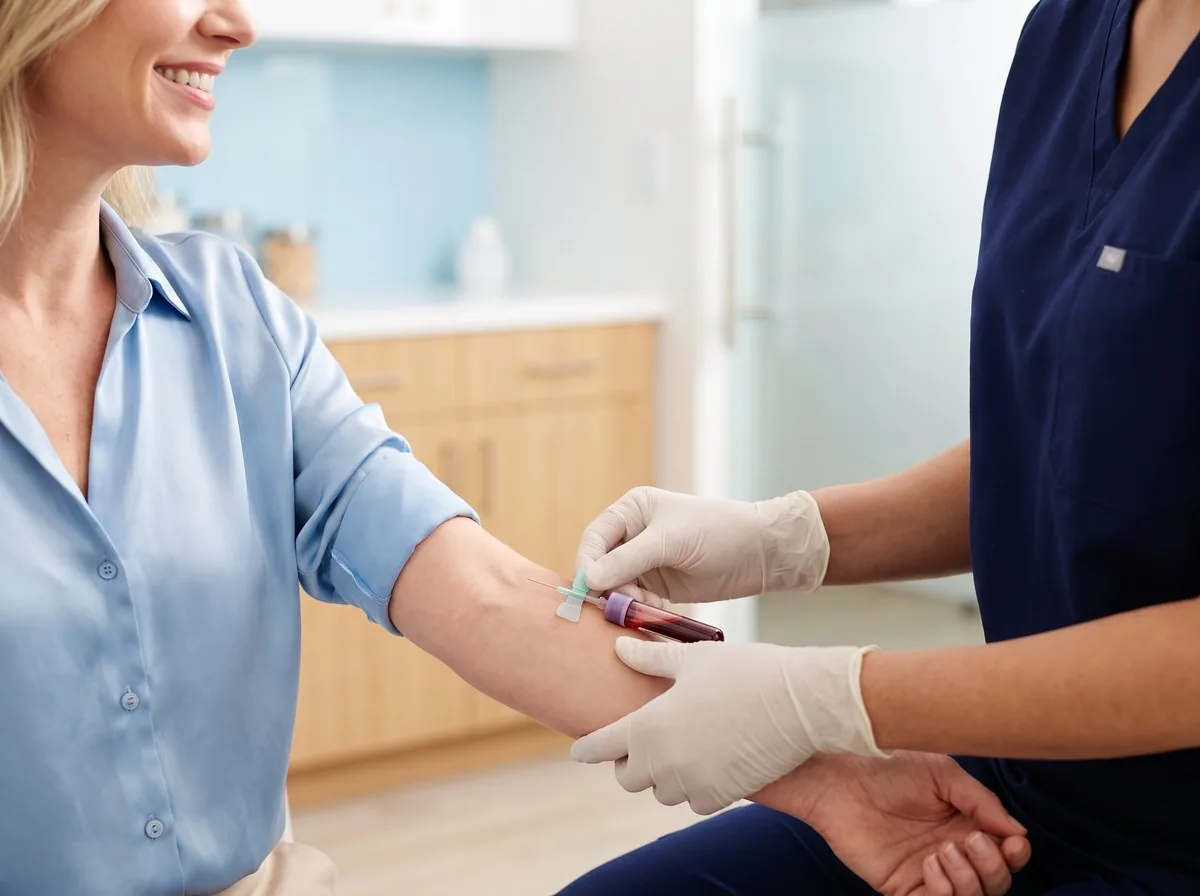
Blood work comes first. A full hormone panel establishes where you actually are, and the pellet dose is calculated from that rather than from a standard starting point.
The insertion itself takes ten to fifteen minutes. The area over the upper buttock is numbed with local anaesthetic, a tiny incision is made, the pellets are placed in the fatty tissue beneath, and the site is closed with a steri-strip. No stitches.
The pellets dissolve slowly and release hormone as your blood flow carries it away. Because uptake follows circulation, output rises somewhat when you are more active, which is closer to how the body would do it than a fixed weekly dose.
They are fully absorbed over three to five months, with nothing left to remove. Repeat labs are drawn before the next insertion so the dose can be corrected then, which is the only point at which it can be changed.
Which product
We offer all three. Pellets are not automatically the answer.

Starts working: Every 3 to 5 months. Lasts: Steady. Nothing to remember, no transfer risk, and steady levels without peaks and troughs. ⚠️ The dose cannot be adjusted once inserted, there is a minor procedure each time, and it is usually the most expensive per year.
Starts working: Weekly or twice weekly. Lasts: Peaks and troughs. Fully adjustable, stop any time, and generally the cheapest option. Requires self-injection and some people feel the dip before the next dose. The right choice if you want control or are still finding your dose.
Starts working: Daily. Lasts: Steady if used consistently. Easy to adjust and easy to stop. ⚠️ Carries a genuine transfer risk to partners and children through skin contact, and absorption varies between people. Needs daily consistency.
Starts working: n/a. Lasts: n/a. Anyone new to hormone therapy who has not yet found a stable dose. Start on something adjustable, establish the dose, then move to pellets for convenience if you want to. Starting with an unadjustable delivery method is the wrong order and we will tell you so.
Good to know
With the trade-offs kept in view.

No cream, no weekly injection, no reminders. Three or four appointments a year and that is the whole protocol.
No peak-and-trough cycle. Some people who feel the dip on injections notice the difference immediately.
Nothing on your skin to transfer to a partner or child, which is the main practical objection to creams.
Structurally identical to what your body produces, dosed to your own labs.
Testosterone for men, estradiol and testosterone for women.
The real downside. If it is too high you wait it out, and that can mean months. This is why labs and a conservative first dose matter so much.
A small incision each time, with a few days of restricted exercise and a small risk of site irritation or extrusion.
Aftercare
Short recovery, and a few rules that genuinely matter.

Keep the site dry and leave the dressing alone. Some tenderness and bruising is normal.
No heavy exercise, no swimming, no baths. This is the one instruction people ignore and it is the main cause of a pellet working its way back out.
Levels build gradually. Most people notice changes in energy and sleep before anything else.
Repeat labs after your first insertion, so the next dose can be corrected.
Occasionally a pellet works its way out through the incision, usually because of early exercise. Call us if you see one.
Symptoms return gradually toward the end of the cycle. That is the signal to book, and most people learn their own interval.
Every 3 to 4 months for men, 4 to 5 for women, with labs beforehand.
Is it for you
Pellets suit people who want hormone therapy to be low-maintenance and who already know roughly what dose works for them.
We offer pellets, injections and creams. Your provider will recommend the delivery method that fits you rather than defaulting to the one with the best margin.
Your timeline
Labs, conservative dose, then reassess.
Frequently asked
BioTE is a brand of bioidentical hormone pellet therapy. The pellets are small, roughly the size of a grain of rice, and are placed under the skin of the upper buttock where they release testosterone or estradiol steadily over three to five months. BHRC is a provider of BioTE pellets; we are not BioTE and we are not owned by them.
Cost depends on the hormone, the dose and how many pellets your labs indicate, so it is quoted after blood work rather than listed. Call your nearest center on (310) 912-7271 for current pricing. When you compare it against injections or creams, compare annual cost rather than per-visit, since pellets are three to four appointments a year.
The area is numbed with local anaesthetic first, so the insertion itself is generally described as pressure rather than pain. The whole procedure takes ten to fifteen minutes. Expect some tenderness and possibly bruising at the site for a few days afterwards.
Three to four months for most men and four to five months for most women. Men generally metabolise them faster. They dissolve completely, so there is nothing to remove.
This is the honest downside of pellets and you should understand it before starting. Once a pellet is in, the dose cannot be turned down or withdrawn. If it is too high you wait for it to wear off, which can take months. It is why we dose conservatively from your labs, why we repeat labs four to six weeks after your first insertion, and why we often suggest establishing your dose on an adjustable method first.
No, they are a different trade-off. Pellets win on convenience and steadiness and lose on adjustability and usually on cost. Injections are cheaper, fully adjustable and can be stopped immediately, at the cost of doing them yourself weekly and sometimes feeling the dip before the next dose. Which is better depends entirely on what you value.
Occasionally, yes. It is called extrusion and it usually happens when someone exercises too soon after insertion. That is why we ask for no heavy exercise, swimming or baths for three to five days. If you see a pellet at the site, call us.
Yes, always, and before every reinsertion. Dosing hormones without labs is guessing, and with an unadjustable delivery method a guess is expensive to correct. The consultation and initial assessment are complimentary.
Enhance your results
What pairs well with neurotoxin.
The full picture on hormone replacement therapy, including injections and creams, from $550.
Learn MoreThe hormone testing every pellet decision is built on.
Learn More
Frequently the real cause when hormone therapy alone does not resolve fatigue.
Learn More
Hormones and metabolism are linked, and both are measurable here.
Learn MoreOur team
The molecule is the same everywhere. Who holds the syringe is not.
Nurse Practitioner
West Hollywood
What Megan does
Pellets, injections and creams. That means the recommendation can be about what suits you rather than about the one thing we happen to sell.
If you are new to hormone therapy, establish your dose on something adjustable first. Starting on a method you cannot adjust is the wrong order, and it costs us the booking to say so.
Not just the first. Dosing an unadjustable delivery method without current labs is guessing with a months-long correction time.
Because too low is a short wait and too high is a long one.
Hormones are the core of what BHRC does. Thyroid, adrenal and metabolic testing all happen in the same building.
Standardised training and the same protocols in every location.
Find a center
Available at all 22 centers. Pick your closest for directions, hours and local pricing.

West Hollywood, CA
8550 Santa Monica Blvd, Ste 101
West Hollywood, CA 90069


Westlake Village, CA
968 South Westlake Blvd, Ste 10
Westlake Village, CA 91361




Las Vegas, NV
1825 Festival Plaza Dr, Ste 180
Las Vegas, NV 89135

Henderson, NV
120 S Green Valley Pkwy, Ste 174
Henderson, NV 89012








Bee Cave, TX
3944 Ranch Rd 620 S, Bldg 1, Ste 100
Bee Cave, TX 78738


San Antonio, TX
23110 W Interstate 10 Frontage Rd, Ste 203
San Antonio, TX 78257




Tell us what you are considering and where, and a provider will be in touch.
"*" indicates required fields
Start your journey
Schedule your complimentary consultation. We will run a full hormone panel and tell you honestly whether pellets are the right delivery method for you, or whether something adjustable would serve you better first.
Medically reviewed by the BHRC clinical team. Last reviewed August 2026.
This page is for general information and is not medical advice. Treatment suitability, pricing and results vary by individual and are confirmed at consultation with a licensed provider.