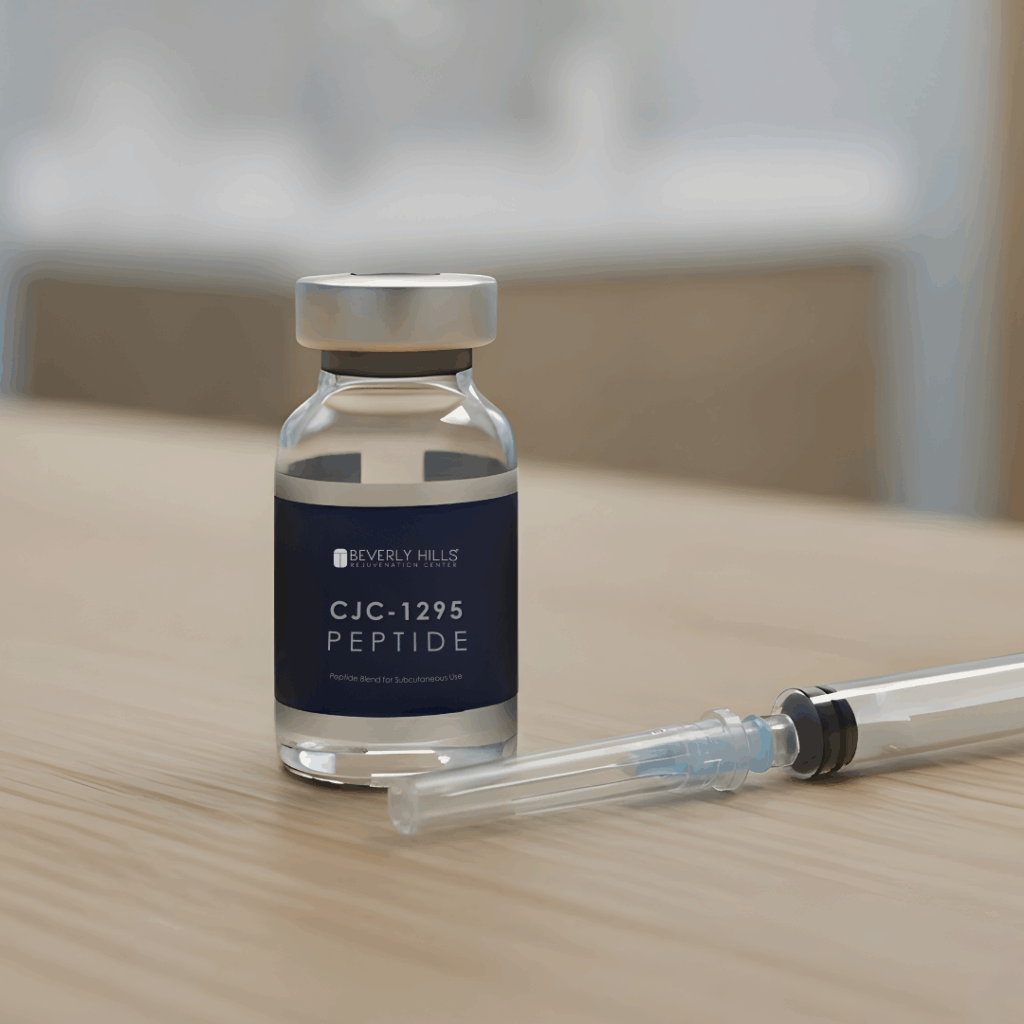
This powerful combination pairs two complementary growth hormone secretagogues (GHS) that work together to naturally enhance your body’s GH production. Unlike synthetic growth hormone, these peptides stimulate your pituitary gland to release GH in a physiologic, pulsatile pattern.
CJC-1295 is a growth hormone-releasing hormone (GHRH) analogue that extends the duration of GH pulses by preventing enzymatic degradation. Ipamorelin is a ghrelin mimetic that selectively stimulates GH release without affecting cortisol or prolactin levels—making it one of the cleanest GH secretagogues available.
Together, they create a synergistic effect: CJC-1295 prolongs each GH pulse while Ipamorelin amplifies its strength, resulting in sustained elevation of growth hormone throughout the day and night for optimal body composition, recovery, and longevity benefits.
CJC-1295 and Ipamorelin are among the most studied and well-tolerated growth hormone secretagogues, with extensive research supporting their safety and efficacy.
Selective Action — Ipamorelin specifically targets GH release without affecting cortisol or prolactin
No Desensitization — CJC-1295 maintains efficacy over time without pituitary downregulation
Minimal Side Effects — Most common: mild injection site reaction, occasional water retention
Physician Supervised — All protocols are monitored by licensed medical professionals
Years of clinical research on growth hormone secretagogues
95%+
Patient tolerability with minimal adverse effects
Questions
Frequently Asked
CJC-1295 + Ipamorelin stimulate your body’s natural GH production through the pituitary gland, maintaining physiologic pulsatile secretion. Synthetic GH (like HGH injections) provides exogenous hormone that can suppress natural production and carries higher risks of side effects. Peptide therapy is safer, more natural, and preserves your body’s regulatory feedback loops.
Most protocols involve subcutaneous injections 5-7 times per week, typically before bed to align with natural GH secretion patterns. Some physicians recommend twice-daily dosing for maximum results. Injections are simple, using a small insulin-type syringe, and most patients quickly become comfortable with the process.
Initial benefits like improved sleep quality and recovery can appear within 2-4 weeks. Body composition changes (muscle gain, fat loss) typically become noticeable around 8-12 weeks. Optimal results occur with consistent use over 3-6 months, as GH’s effects are cumulative and require time for tissue remodeling.
CJC-1295 + Ipamorelin are very well-tolerated. The most common side effects are mild: slight water retention, flushing, or injection site reactions. Unlike some GH secretagogues, Ipamorelin does not increase hunger, cortisol, or prolactin. Serious side effects are rare when used under physician supervision with appropriate dosing.
Yes. CJC-1295 + Ipamorelin pair well with testosterone replacement therapy (TRT), thyroid optimization, and other hormone therapies. Many patients combine peptide therapy with weight loss medications for enhanced body composition results. Your physician will create an integrated protocol tailored to your specific health goals.
Many patients use CJC-1295 + Ipamorelin long-term for anti-aging and performance benefits. Common approaches include continuous therapy, 5-days-on/2-days-off protocols, or cycling (e.g., 3-6 months on, 1-2 months off). Your physician will recommend a schedule based on your response, goals, and laboratory monitoring.
Peptide therapy for anti-aging, performance enhancement, and body composition is typically not covered by insurance. However, we offer competitive self-pay pricing and flexible treatment options. Some HSA/FSA accounts may reimburse peptide therapy—consult your plan administrator for specifics.
*IMPORTANT: CJC-1295 and Ipamorelin are prescription medications that must be obtained through a licensed physician. Results vary based on individual factors including age, baseline hormone levels, diet, exercise, and adherence to protocol. This page is for educational purposes only and does not constitute medical advice. All peptide therapy should be conducted under physician supervision with appropriate laboratory monitoring. Not all patients are candidates for growth hormone secretagogue therapy. Consult with our medical team to determine if this treatment is appropriate for your health status and goals.
CJC-1295 / Ipamorelin at BHRC: At a Glance
Administered
Subcutaneous injection
Typical timing
Nightly, before bed on an empty stomach
Typical cycle
12–24 weeks, then reassess
Onset
Sleep first, often within 1–2 weeks
Baseline labs
IGF-1, metabolic panel, hormone panel
Supervision
Prescribed and monitored by a BHRC provider
What a CJC-1295 / Ipamorelin Protocol Actually Involves
These two peptides are paired because they work on the growth-hormone axis through different, complementary routes — CJC-1295 as a growth-hormone-releasing hormone analogue, Ipamorelin as a selective secretagogue. Used together they produce a more physiological release pattern than either alone, and crucially, they prompt your own pituitary rather than replacing its output.
Consultation and goal settingRecovery, sleep quality, body composition and energy are the goals patients typically bring. A provider reviews training load, sleep, nutrition, existing hormone status and medications. If your sleep is being wrecked by something structural, or your labs point to an untreated deficiency, that gets addressed first.
Baseline laboratory workIGF-1 as the primary marker of GH-axis activity, plus a metabolic panel and hormone panel as indicated. IGF-1 is the number this protocol is steered by, and without a baseline value there is nothing to steer against.
Protocol design and timingDosing is typically nightly on an empty stomach, because the aim is to reinforce the body’s natural overnight GH pulse. Food — particularly carbohydrate — close to the dose blunts the effect. This is the single most common reason a protocol underperforms.
Administration trainingYou are shown reconstitution, syringe measurement, site rotation and storage. Both peptides are reconstituted powders, and technique errors here translate directly into inconsistent dosing.
Follow-up IGF-1 and reassessmentIGF-1 is re-checked partway through the cycle and the dose adjusted to keep you in an appropriate range. The goal is a physiological range, not the highest number achievable — more is not better here, and pushing IGF-1 above range is where risk starts to accumulate.
Because this pairing prompts your own pituitary rather than supplying exogenous growth hormone, it retains the body’s regulatory feedback — which is the main reason it is generally preferred over direct HGH for the goals most patients have. For the full technical breakdown — dosing ranges, reconstitution math, syringe calculations and cycle structures — see our complete CJC-1295 & Ipamorelin dosage guide.
Response varies between individuals, and the timeline below reflects what patients on a supervised protocol commonly report rather than a guaranteed outcome. Your provider will set expectations specific to your labs, history and goals.
Timeframe
What patients typically report
Weeks 1–2
Sleep is almost always the first thing to change — deeper sleep and easier onset. This is the most consistently reported early effect.
Weeks 3–6
Recovery between training sessions and general daytime energy commonly improve. Body-composition changes are not yet meaningful at this stage.
Weeks 6–12
The window in which body-composition changes typically become apparent, and only alongside consistent training and adequate protein intake. The peptides do not substitute for either.
Weeks 12–24
Follow-up IGF-1 and reassessment. Dose is adjusted to keep you in range, and the decision to continue or cycle off is made here.
After the cycle
Cycling off is standard practice. Whether to run another cycle depends on your follow-up labs and what actually changed.
Note: Anyone promising dramatic body-composition change inside the first month is overselling. The consistent early signal is sleep quality; visible composition change takes months and depends far more on training and nutrition than on the protocol.
How CJC-1295 / Ipamorelin Compares to Other Options
Patients often arrive comparing this pairing to direct HGH or to the individual components. The differences matter and are worth understanding before your consultation.
Option
Primary use
Administration
Best suited to
CJC-1295 + Ipamorelin
Stimulates your own GH release, physiological pattern
Subcutaneous, nightly
Most patients seeking recovery, sleep and body composition
Ipamorelin alone
Selective GH secretagogue, gentler effect
Subcutaneous, nightly
Patients wanting a more conservative starting point
CJC-1295 alone
GHRH analogue
Subcutaneous
Rarely used alone; the pairing is generally more effective
Direct HGH
Exogenous growth hormone
Subcutaneous, daily
Diagnosed growth hormone deficiency, prescribed and closely managed
Tesamorelin
Targeted visceral fat reduction
Subcutaneous, daily
Patients with a specific visceral fat concern
Direct HGH bypasses your body’s regulatory feedback entirely and carries a different risk and cost profile. For the goals most patients present with, the secretagogue pairing is the more appropriate starting point.
Who Is and Isn’t a Candidate
Often appropriate for
Adults over roughly 30 noticing declining recovery capacity, sleep quality or body composition
Patients training consistently who want recovery support rather than a substitute for training
Patients with baseline IGF-1 in a low or low-normal range for their age
Patients who will dose nightly and consistently — sporadic administration produces sporadic results
Patients willing to complete follow-up laboratory work mid-cycle
Not appropriate for
Anyone with an active malignancy or recent cancer history, unless specifically cleared by their oncologist
Patients with active proliferative retinopathy
Anyone pregnant, breastfeeding or actively trying to conceive
Athletes subject to WADA or USADA testing — growth hormone secretagogues are prohibited and detectable
Patients with uncontrolled diabetes, until it is managed
Patients expecting body-composition change without training or adequate protein intake
Minors, and anyone seeking to self-administer without provider oversight
Candidacy is decided in consultation, not online. BHRC providers review your history, current medications and baseline labs before any peptide protocol is prescribed. CJC-1295 / Ipamorelin is dispensed only under provider supervision.
Monitoring and Follow-Up
IGF-1 is the number that matters here. It is the most direct read on whether the protocol is doing what it is supposed to, and on whether you have gone past the point where benefit stops and risk begins.
IGF-1 — baseline and mid-cycle; the primary steering marker for dose adjustment
Fasting glucose and HbA1c — GH-axis activity can affect insulin sensitivity, so glycaemic markers are tracked
Sleep quality — the earliest and most reliable subjective signal; worth logging from day one
Body composition — measured consistently, not by scale weight alone
Fluid retention, joint discomfort or carpal tunnel symptoms — the classic signs of dosing above the appropriate range; report these promptly
Injection-site condition — with consistent site rotation
If mid-cycle IGF-1 comes back above the appropriate range, the correct response is to reduce the dose, not to accept it as a sign the protocol is working. Higher is not better, and your provider will adjust accordingly.
CJC-1295 / Ipamorelin Questions, Answered
Why are CJC-1295 and Ipamorelin used together?
They act on the growth-hormone axis through different, complementary routes — CJC-1295 as a GHRH analogue, Ipamorelin as a selective secretagogue. Combined, they produce a more physiological release pattern than either alone. Ipamorelin is also relatively selective, meaning less impact on cortisol and appetite than older secretagogues.
When should I inject — and does timing really matter?
It matters more than almost anything else. Dosing is typically nightly on an empty stomach, to reinforce your natural overnight GH pulse. Eating close to the dose, particularly carbohydrate, blunts the release. Poor timing is the most common reason a protocol underdelivers.
How is this different from taking HGH?
HGH supplies growth hormone directly, bypassing your body’s regulatory feedback. This pairing prompts your own pituitary to release it, which preserves that feedback and generally produces a more physiological pattern. For the goals most patients have, the secretagogue approach is the more appropriate starting point — and typically less expensive.
How long before I see results?
Sleep quality usually improves within the first week or two and is the most consistent early signal. Recovery and energy follow across weeks three to six. Body-composition changes generally take two to three months and depend heavily on training and nutrition. Anyone promising dramatic change in month one is overselling.
Do I need a prescription?
Yes. BHRC prescribes and dispenses both peptides under provider supervision following consultation and baseline labs. We do not supply them as unsupervised products. Peptides sold online under ‘research use only’ labelling carry real sourcing, purity and legal risk.
How much does CJC-1295 / Ipamorelin therapy cost?
Cost depends on your protocol, cycle length and required lab work. Pricing is reviewed transparently at consultation before anything is prescribed. Peptide therapy is generally not covered by insurance.
Are these FDA-approved?
No. Neither is an FDA-approved drug. Both are accessed through compounding pharmacies and used off-label under provider supervision, which is why baseline and follow-up IGF-1 monitoring is treated as a requirement rather than an optional extra.
What are the side effects?
Most commonly reported are injection-site reactions, transient flushing or head-rush shortly after dosing, and vivid dreams. Fluid retention, joint discomfort or carpal-tunnel-type symptoms usually indicate dosing above the appropriate range and warrant a dose reduction — report them promptly.
Will this show up on a drug test?
Yes. Growth hormone secretagogues are prohibited under WADA and USADA and are detectable. If you compete in a tested sport, this is not an option, and you should verify current status against the governing list rather than relying on general guidance.
Where can I get CJC-1295 / Ipamorelin near me?
BHRC provides physician-supervised peptide therapy across its locations, including West Hollywood, West Los Angeles, Valencia, Paradise Valley and Summerlin. Consultation determines candidacy and protocol, with mid-cycle labs and follow-up handled through your treating location.
The literature below is peer-reviewed background on CJC-1295 / Ipamorelin and the mechanisms discussed on this page. It is provided so you can read the primary sources yourself. It is not evidence of any particular outcome at BHRC, and much of it is preclinical — animal or cell-culture work that has not been replicated in humans. Your provider will discuss what the evidence does and does not support for your situation.
Prolonged stimulation of growth hormone (GH) and insulin-like growth factor I secretion by CJC-1295, a long-acting analog of GH-releasing hormone, in healthy adults. J Clin Endocrinol Metab (2006). PubMed 16352683
Ipamorelin, the first selective growth hormone secretagogue. Eur J Endocrinol (1998). PubMed 9849822
The Safety and Efficacy of Growth Hormone Secretagogues. Sex Med Rev (2018). PubMed 28400207
Beyond the androgen receptor: the role of growth hormone secretagogues in the modern management of body composition in hypogonadal males. Transl Androl Urol (2020). PubMed 32257855
Injectable Peptide Therapy: A Primer for Orthopaedic and Sports Medicine Physicians. Am J Sports Med (2026). PubMed 41476424
Safety and Efficacy of Approved and Unapproved Peptide Therapies for Musculoskeletal Injuries and Athletic Performance. Sports Med (2026). PubMed 41966639
NEW PATIENT
15%off
schedule
your free consultation
choose a time that works for your consultation or treatment