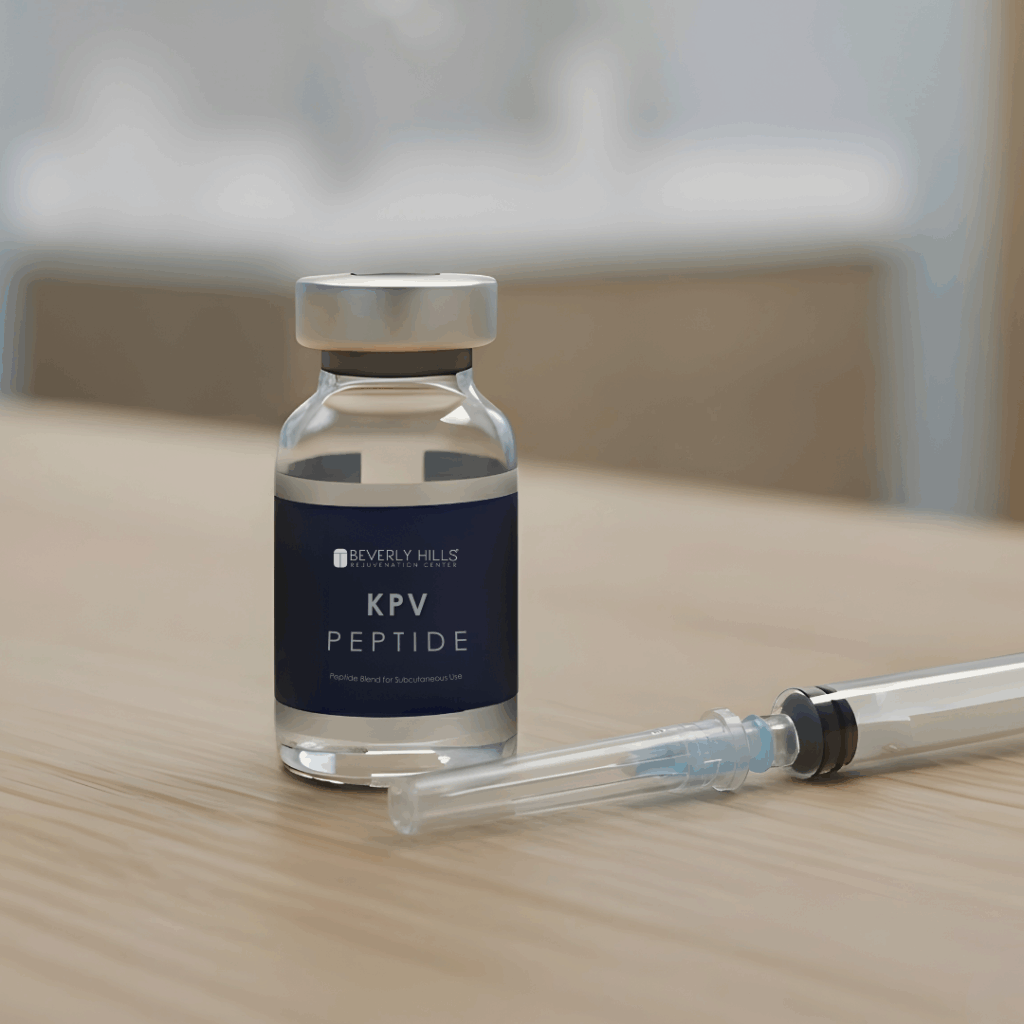
KPV is a naturally occurring tripeptide fragment of alpha-melanocyte stimulating hormone (α-MSH) that powerfully modulates inflammatory responses throughout the body. By targeting key inflammatory pathways, KPV supports tissue healing, reduces chronic inflammation, and promotes gut health through its unique anti-inflammatory and antimicrobial properties.
KPV is a tripeptide consisting of three amino acids (lysine-proline-valine) naturally derived from alpha-melanocyte stimulating hormone (α-MSH), a critical immune-regulating peptide in the body. This small but powerful peptide plays a vital role in controlling inflammation by modulating key inflammatory pathways and inhibiting pro-inflammatory signaling cascades.
Unlike conventional anti-inflammatory drugs that suppress the entire immune system, KPV works intelligently by targeting specific inflammatory mediators. It inhibits pro-inflammatory cytokines while preserving beneficial immune responses, making it particularly effective for chronic inflammatory conditions where targeted inflammation control is essential.
Research has demonstrated KPV’s remarkable efficacy in supporting gut health, particularly in inflammatory bowel conditions such as ulcerative colitis and Crohn’s disease. The peptide exhibits both anti-inflammatory and antimicrobial properties, helping to restore intestinal barrier function, reduce mucosal inflammation, and promote healing of damaged gut tissue. Additionally, KPV has shown promise in managing skin inflammation, wound healing, and systemic inflammatory conditions by modulating immune responses at the cellular level.
KPV reduces inflammation through multiple pathways that target pro-inflammatory signaling while supporting tissue healing and immune balance.
NF-κB Inhibition
Directly inhibits nuclear factor kappa B (NF-κB), a master regulator of inflammatory gene expression, preventing production of pro-inflammatory cytokines like TNF-α and IL-6.
Antimicrobial Activity
Exhibits broad-spectrum antimicrobial properties against pathogenic bacteria and biofilms, helping to rebalance gut microbiota and reduce inflammatory triggers from dysbiosis.
Mucosal Healing
Promotes intestinal barrier integrity and mucosal tissue repair by reducing inflammation at the gut lining, supporting tight junction function and healing damaged epithelial cells.
Clinically studied for reducing inflammation in ulcerative colitis and Crohn’s disease, helping to calm inflamed intestinal tissue and support remission.
Gut Barrier Restoration
Promotes intestinal barrier function by supporting tight junction integrity, reducing intestinal permeability (“leaky gut”), and enhancing mucosal defense mechanisms.
Reduced Systemic Inflammation
Modulates inflammatory cytokines throughout the body, helping to reduce chronic low-grade inflammation associated with metabolic disorders and aging.
Antimicrobial Properties
Exhibits natural antimicrobial activity against pathogenic bacteria, biofilms, and harmful microorganisms, supporting a healthier gut microbiome balance.
Skin & Wound Healing
Supports dermatological healing by reducing skin inflammation, promoting tissue repair, and addressing inflammatory skin conditions like eczema and psoriasis.
Autoimmune Modulation
Helps regulate overactive immune responses in autoimmune conditions by balancing inflammatory pathways without broadly suppressing immune function.
KPV has demonstrated an excellent safety profile in clinical research and therapeutic use. Our medical team evaluates each patient individually to ensure appropriate candidacy and optimal dosing strategies.
Well-Tolerated — Most patients experience no adverse effects; KPV is generally very well-tolerated with minimal side effects reported.
Bioidentical Peptide — Derived from naturally occurring α-MSH, KPV is recognized by the body as a bioidentical compound with excellent biocompatibility.
Medical Oversight — All therapy is physician-supervised with regular monitoring to ensure safety, efficacy, and proper dose optimization.
Years of research demonstrating safety and anti-inflammatory efficacy
95%+
Patient tolerability rate with excellent safety profile
Questions
Frequently Asked
KPV works by inhibiting nuclear factor kappa B (NF-κB), a master regulator of inflammatory gene expression. By blocking NF-κB activation, KPV prevents the production of pro-inflammatory cytokines like TNF-alpha, IL-6, and IL-1β. This targeted approach reduces inflammation at the source without broadly suppressing the immune system. KPV also exhibits antimicrobial properties that help address inflammatory triggers from pathogenic bacteria, particularly in the gut.
KPV has been clinically studied for inflammatory bowel diseases (ulcerative colitis, Crohn’s disease), leaky gut syndrome, chronic inflammatory conditions, autoimmune disorders, skin inflammation (eczema, psoriasis), and wound healing. It’s particularly effective for gut-related inflammation due to its direct effects on intestinal barrier function and mucosal healing. Your BHRC physician will assess whether KPV is appropriate for your specific inflammatory condition.
KPV is administered via subcutaneous or intramuscular injection, typically at doses ranging from 200-500mcg per injection. Most protocols involve 1-2 daily injections depending on the severity of inflammation and individual response. Some patients may use KPV in cycles of 4-8 weeks, while others with chronic conditions may benefit from longer-term use. Your physician will design a personalized dosing protocol based on your specific needs and inflammatory markers.
Response times vary based on the condition being treated and individual factors. Some patients report reduced inflammatory symptoms within 1-2 weeks of consistent use. For gut-related conditions, noticeable improvements in digestive symptoms, bowel regularity, and abdominal discomfort often occur within 2-4 weeks. Measurable changes in inflammatory markers typically appear within 4-6 weeks. Long-term benefits, including sustained inflammation reduction and tissue healing, develop over 8-12 weeks of therapy.
KPV has an excellent safety profile with minimal reported side effects. Occasional mild injection site reactions (redness, tenderness) may occur. Unlike systemic immunosuppressants, KPV does not broadly suppress immune function. However, individuals with active infections should consult with their physician before starting therapy. Comprehensive medical evaluation ensures safe and appropriate use. There are no known significant drug interactions, but full disclosure of medications is essential during your consultation.
Yes, KPV can be safely combined with other peptide therapies, gut healing protocols, and anti-inflammatory interventions. Many patients use KPV alongside BPC-157 for enhanced gut healing, with other immune-modulating peptides, or as part of comprehensive inflammatory management programs. KPV is generally compatible with conventional medications, but your BHRC physician will review all current treatments to design an integrated protocol optimized for your specific condition.
KPV peptide therapy is typically not covered by insurance as it’s considered preventive and regenerative medicine. BHRC offers transparent pricing and flexible payment options to make this innovative therapy accessible. Many patients find the investment worthwhile given the significant impact on inflammatory control and overall quality of life. Our team can provide detailed cost information and discuss payment plans during your consultation.
*These statements have not been evaluated by the Food and Drug Administration. This product is not intended to diagnose, treat, cure, or prevent any disease. KPV is provided for anti-inflammatory support and wellness purposes under physician supervision. Individual results may vary. A consultation with our medical team and baseline laboratory testing are required to determine if this therapy is appropriate for you.
KPV at BHRC: At a Glance
Administered
Subcutaneous injection or oral capsule
Typical frequency
Daily during an active course
Typical course
4–8 weeks, then reassess
Onset
Inflammatory symptoms often shift within 2–4 weeks
Baseline workup
Inflammatory markers; GI or dermatologic history
Supervision
Prescribed and monitored by a BHRC provider
What a KPV Protocol Actually Involves
KPV is a short tripeptide fragment (lysine–proline–valine) derived from the alpha-MSH hormone, studied for its anti-inflammatory signalling. It is used most often for gut-related and inflammatory skin concerns. Because those concerns frequently have serious underlying causes, the first job of a KPV consultation is ruling out what should not be treated with a peptide.
Consultation and differential reviewA provider reviews your symptom history, prior GI or dermatologic workup, current medications and any existing diagnosis. Persistent gut or skin symptoms warrant proper diagnostic workup — KPV is not a substitute for gastroenterology or dermatology evaluation, and we will say so directly if that is what you need.
Baseline assessmentDepending on your presentation this may include inflammatory markers, a metabolic panel, and documentation of current symptom severity. Where the concern is dermatologic, baseline photography is often used so change can be assessed objectively rather than from memory.
Route selection: oral or injectableThis is the decision that most affects outcomes. Oral KPV is generally selected when the target is the gut lining itself, since it acts locally along the GI tract. Subcutaneous administration is generally selected for systemic or dermatologic targets. Your provider will explain which applies to your case and why.
Protocol design and dispensingDose, frequency and course length are set and the formulation is dispensed. For injectable protocols you are trained on reconstitution, measurement, site rotation and storage.
Reassessment at 4–8 weeksSymptom scores, inflammatory markers where relevant, and photographic comparison are reviewed. KPV is used as a defined course rather than an open-ended therapy — if it has not helped by reassessment, continuing rarely changes that.
KPV is generally well tolerated, which sometimes leads patients to treat it casually. The risk is not usually the peptide itself — it is spending months on it while an undiagnosed condition progresses untreated. For the full technical breakdown — dosing ranges, reconstitution math, syringe calculations and cycle structures — see our BPC-157 dosage guide.
Response varies between individuals, and the timeline below reflects what patients on a supervised protocol commonly report rather than a guaranteed outcome. Your provider will set expectations specific to your labs, history and goals.
Timeframe
What patients typically report
Weeks 1–2
Typically little perceptible change. Some patients with GI-focused protocols report early changes in bloating or stool consistency; this is variable and not predictive of the final result.
Weeks 2–4
The window in which most patients who respond first notice something — commonly reduced GI discomfort, or reduced redness and irritation in dermatologic cases.
Weeks 4–6
Changes tend to consolidate. This is usually when photographic comparison or symptom scoring shows a difference that is visible to someone other than you.
Weeks 6–8
Formal reassessment. Inflammatory markers are re-checked where they were part of the baseline, and the decision is made to continue, taper or stop.
After the course
Many patients do not continue indefinitely. KPV is commonly used in defined courses around symptomatic periods rather than as a permanent daily therapy.
Note: If your symptoms are worsening at any point — particularly bleeding, unexplained weight loss, persistent fever or severe pain — stop and seek medical evaluation immediately. These are not symptoms to manage with a peptide protocol, and they warrant urgent assessment regardless of what else you are taking.
How KPV Compares to Other Options
KPV is often researched alongside other repair and anti-inflammatory peptides, and patients frequently arrive having read that they are interchangeable. They are not — they act through different mechanisms and suit different targets.
Option
Primary use
Administration
Best suited to
KPV
Anti-inflammatory signalling; gut and skin focus
Oral capsule or subcutaneous
Inflammatory GI and dermatologic concerns
BPC-157
Tissue repair, gut lining, musculoskeletal recovery
Oral or subcutaneous
Injury recovery and gut-lining repair
TB-500
Systemic tissue repair and mobility
Subcutaneous
Musculoskeletal recovery, often stacked with BPC-157
GHK-Cu
Skin remodelling, collagen signalling
Subcutaneous or topical
Skin quality, healing and cosmetic concerns
Thymosin Alpha-1
Immune modulation
Subcutaneous
Immune support under specific clinical circumstances
KPV and BPC-157 are the pair most often confused, and they are genuinely complementary in some protocols — KPV weighted toward inflammatory signalling, BPC-157 toward repair. Combining them is a clinical decision with a rationale, not a default.
Who Is and Isn’t a Candidate
Often appropriate for
Adults with chronic low-grade inflammatory GI symptoms who have already had appropriate diagnostic workup
Patients with inflammatory skin concerns seeking an adjunct alongside dermatologic care
Patients who have had partial benefit from dietary and lifestyle intervention and want to layer a supervised protocol on top
Patients who prefer a defined course with a clear reassessment point over open-ended therapy
Patients willing to document symptoms consistently so the reassessment is based on data
Not appropriate for
Anyone with undiagnosed GI bleeding, unexplained weight loss or persistent severe abdominal pain — these require urgent diagnostic evaluation, not a peptide
Anyone pregnant, breastfeeding or actively trying to conceive
Patients with an active malignancy or recent cancer history, unless specifically cleared by their oncologist
Patients with an autoimmune condition on immunomodulating therapy, without coordination with their treating specialist
Anyone seeking to replace prescribed treatment for diagnosed inflammatory bowel disease
Minors, and anyone seeking to self-administer without provider oversight
Candidacy is decided in consultation, not online. BHRC providers review your history, current medications and baseline labs before any peptide protocol is prescribed. KPV is dispensed only under provider supervision.
Monitoring and Follow-Up
Inflammatory conditions fluctuate on their own, which makes them unusually easy to misread. Without a documented baseline it is very difficult to distinguish a real treatment effect from a symptom cycle that would have improved anyway.
Structured symptom scoring — the single most useful tool here; the same handful of questions answered weekly beats trying to recall how bad things were in week one
Inflammatory markers — where they formed part of your baseline, re-checked at reassessment
Photographic documentation — for dermatologic targets, taken in consistent lighting and position
Dietary and medication log — so improvements are not misattributed when several things changed at once
Tolerability — GI upset with oral formulations or injection-site reactions, reported as they occur
At reassessment the honest question is whether anything measurably changed. If not, extending the course or raising the dose is rarely the right answer, and your provider will discuss alternatives with you.
KPV Questions, Answered
Should I take KPV orally or by injection?
It depends on the target. Oral KPV acts locally along the GI tract and is generally selected when the gut lining itself is the concern. Subcutaneous administration is generally selected for systemic or dermatologic targets. This is a clinical decision made in consultation — the two are not interchangeable, and choosing the wrong route is a common reason protocols underperform.
Do I need a prescription for KPV?
Yes. BHRC prescribes and dispenses KPV under provider supervision after a consultation. We do not supply it as an unsupervised product. Peptides sold online under ‘research use only’ labelling fall outside that framework and carry genuine sourcing, purity and legal risk.
How much does KPV therapy cost?
Cost varies with formulation, course length and whether any lab work is required. Pricing is reviewed transparently during your consultation before anything is prescribed. Peptide therapy is generally not covered by insurance.
Can KPV treat my IBD, colitis or Crohn’s?
No. KPV is not a treatment for diagnosed inflammatory bowel disease and must not replace prescribed therapy. Some patients use it as a supervised adjunct alongside their gastroenterology care, coordinated with their treating specialist. If you have IBD, that coordination is not optional.
Is KPV FDA-approved?
No. KPV is not an FDA-approved drug. It is accessed through compounding pharmacies and used off-label under provider supervision. Human research is limited relative to established medications, which is exactly why supervision and structured reassessment matter.
How is KPV different from BPC-157?
They work through different mechanisms. KPV is studied primarily for anti-inflammatory signalling; BPC-157 is studied primarily for tissue repair. They overlap in gut applications, which is why they are often confused and sometimes used together — but combining them should follow a clinical rationale rather than a forum protocol.
How long before KPV works?
Patients who respond most often report changes between weeks two and four, with consolidation by weeks four to six. Formal reassessment happens at four to eight weeks. If nothing has shifted by that point, continuing is unlikely to change the outcome.
What are the side effects of KPV?
KPV is generally well tolerated. The most commonly reported issues are mild GI upset with oral formulations and injection-site reactions — redness or tenderness — with subcutaneous use. Anything persistent, severe or unexpected should be reported to your provider promptly.
Where can I get KPV near me?
BHRC offers physician-supervised peptide therapy across its locations, including West Hollywood, West Los Angeles, Valencia, Paradise Valley and Summerlin. Your consultation determines candidacy, route and protocol, with follow-up handled through your treating location.
Can KPV be combined with other peptides?
Yes, and it commonly is — most often with BPC-157 for gut protocols. Each addition increases both cost and complexity, so every element should have a stated reason. Stacking decisions are made in consultation after reviewing your history and current medications.
The literature below is peer-reviewed background on KPV and the mechanisms discussed on this page. It is provided so you can read the primary sources yourself. It is not evidence of any particular outcome at BHRC, and much of it is preclinical — animal or cell-culture work that has not been replicated in humans. Your provider will discuss what the evidence does and does not support for your situation.
Critical role of PepT1 in promoting colitis-associated cancer and therapeutic benefits of the anti-inflammatory PepT1-mediated tripeptide KPV in a murine model. Cell Mol Gastroenterol Hepatol (2016). PubMed 27458604
The neuroimmunomodulatory peptide alpha-MSH. Ann N Y Acad Sci (2000). PubMed 11268347
Transdermal Iontophoretic Delivery of Lysine-Proline-Valine (KPV) Peptide Across Microporated Human Skin. J Pharm Sci (2017). PubMed 28343991
Lysine-Proline-Valine peptide mitigates fine dust-induced keratinocyte apoptosis and inflammation by regulating oxidative stress and modulating the MAPK/NF-κB pathway. Tissue Cell (2025). PubMed 40073467
Safety and Efficacy of Approved and Unapproved Peptide Therapies for Musculoskeletal Injuries and Athletic Performance. Sports Med (2026). PubMed 41966639
Dosage & Protocol Library
Related Peptide Dosage Guides
KPV is most often run alongside tissue-repair and recovery peptides. These guides cover exact dosing, reconstitution and cycling for the protocols we use most.