
BHRC BLOG
Cell Factor & Growth-Factor Therapy — What the Evidence Shows
Cell Factor & Growth-Factor Therapy
A good mechanism, a thin evidence base, and a regulatory claim the whole industry repeats without checking. Here is the accurate version.
1. What a growth-factor preparation actually is
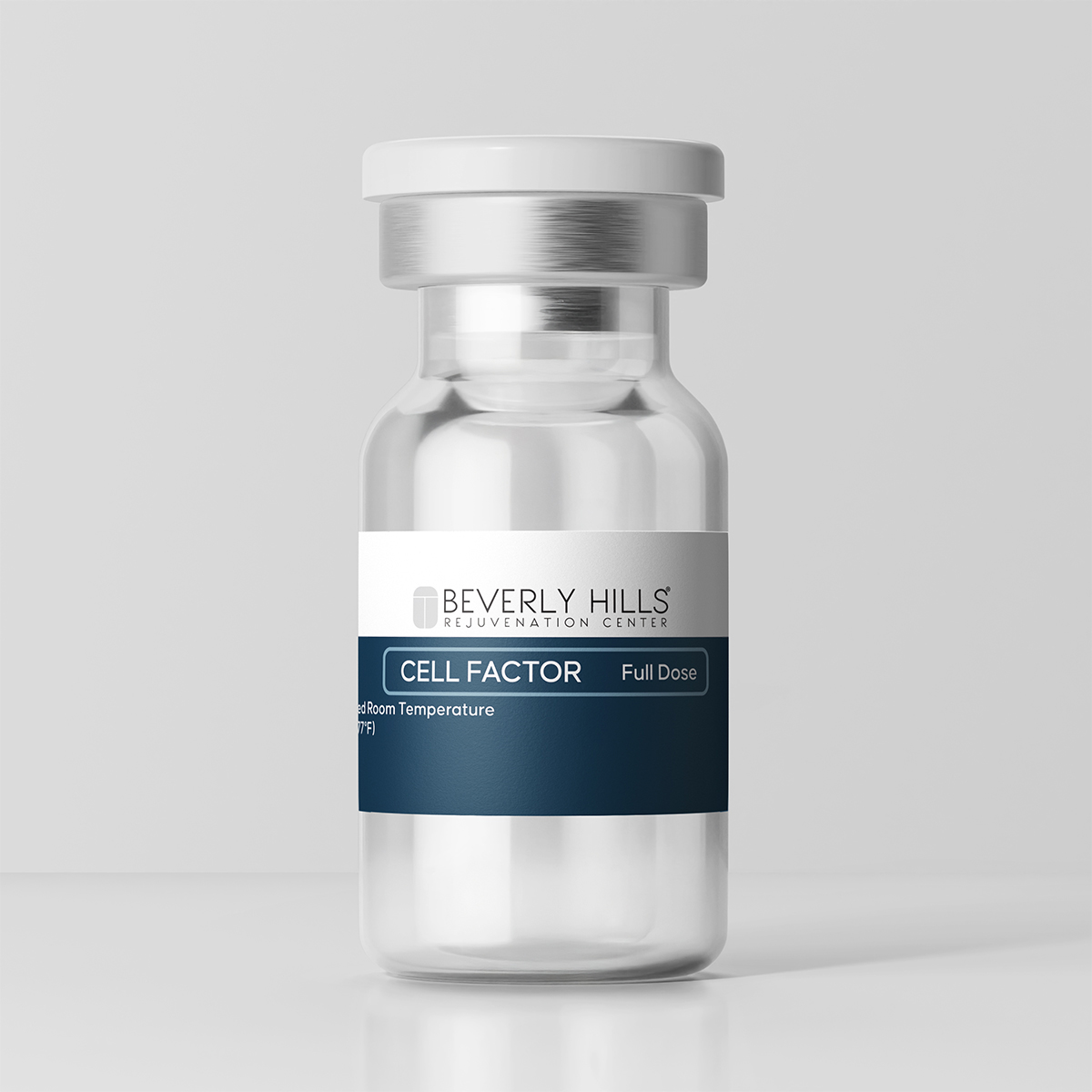
Cells communicate chemically. When a cell is placed in culture it secretes a mixture of proteins into the surrounding medium — growth factors, cytokines, and small vesicles carrying signalling molecules. Collect and process that mixture and you have what the literature calls a secretome or a conditioned-medium product.
The logic is straightforward: rather than transplanting cells, deliver the signals that cells would have sent. Applied to skin or scalp after a treatment that has created controlled micro-injury, the proposed effect is to amplify the repair response the injury has already started.
That is a genuinely interesting mechanism. It is also, at this stage, a mechanism rather than a demonstrated clinical outcome — and the distinction is the whole substance of this article.

2. The regulatory position, stated precisely
This is where the category gets confusing, and where a lot of published claims — across the industry, not just here — do not hold up. Here is the framework, accurately.
Human cell and tissue products are regulated under 21 CFR Part 1271. A product that meets a narrow set of criteria can be regulated solely under Section 361 of the Public Health Service Act, meaning it does not require premarket approval. Products that fall outside those criteria are regulated as drugs or biologics under Section 351 and do require approval.
What we can say accurately about this whole category: no growth-factor, secretome or exosome product holds FDA approval for an aesthetic or regenerative indication. The FDA has issued public safety communications about unapproved regenerative products, and has been explicit that exosome products in particular are not approved for any such use. Any clinic offering products in this family — and we are one of them — should be telling you that rather than implying an approval that does not exist.
The same reasoning applies to PRP, which we covered in detail elsewhere: PRP is not FDA-approved either, and the preparation devices are cleared only for mixing PRP with bone graft in orthopaedic surgery. Our PRP and PRF guide grades the evidence indication by indication.
3. What the evidence supports — and where it stops
The honest summary: mechanistic plausibility is good, early human data is encouraging in places, and rigorous controlled evidence is thin.

A 2025 systematic review in Medicina examined platelet concentrates and autologous growth factors in facial rejuvenation across thirteen studies, seven of them randomised. It found some genuine signal — stability of effect at 90 days, improved rete-peg architecture, increased collagen I expression — while noting that some trials found no significant improvement in photoaging scores. The authors’ conclusion is the one to hold onto: the evidence is “currently very limited,” constrained by small samples, no standardisation of preparation, variable protocols and short follow-up.
Product composition is the unsolved problem. Two preparations sold under the same category name can differ substantially in what is actually in them — and almost nobody publishes a composition assay.
4. Where it is used, and what to expect
- With microneedling or RF microneedling — the most common pairing, applied to the open micro-channels immediately after. Our RF microneedling guide covers what the underlying treatment does on its own.
- With laser resurfacing — same logic, applied post-treatment.
- With PRP — combining an autologous platelet preparation with a growth-factor booster.
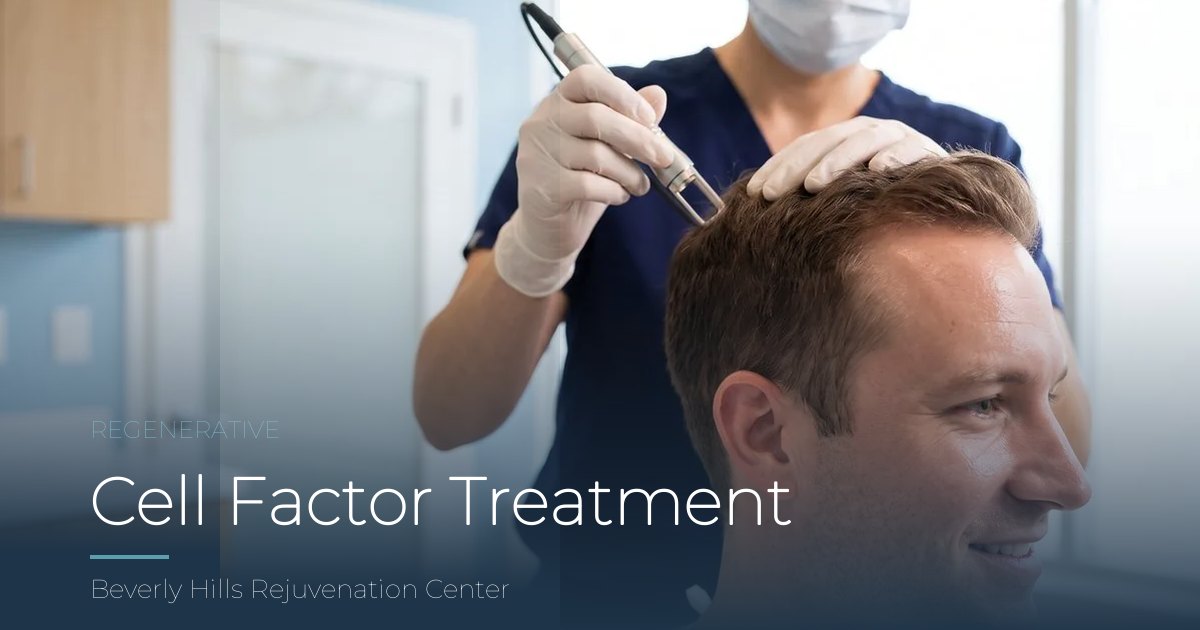
- As a standalone scalp session for hair, at $950.
- Added to IV therapy, where the evidence is thinnest and we would want you to have read our honest piece on IV therapy first.
Timeline. Whatever the booster contributes rides on the timeline of the treatment underneath it. Microneedling and RF microneedling remodel collagen over roughly three months; that is when to assess. Nothing in this category produces a visible result the following week, and a clinic promising one is describing swelling.
5. What it costs
| What you book | Price |
|---|---|
| Skin rejuvenation / booster | from $499 |
| With microneedling, laser or IV | from $499 |
| Hair restoration, standalone session | $950 |
Rejuvenation Club members save 20% on every treatment plus priority scheduling. Because it is most often an add-on, the practical question at consultation is whether the underlying treatment is the right one — the booster is a second-order decision.
6. Questions worth asking about any regenerative product
These apply to us and to every other clinic offering this category. A good provider will not be thrown by any of them.
- “Is this FDA-approved for what you are using it for?” For this whole category the honest answer is no. Watch for an answer that substitutes “cleared,” “registered” or “classified.”
- “Is it autologous or is it a manufactured product?” Your own blood carries no rejection or transmission risk. A manufactured human-derived product raises different questions about sourcing, screening and processing.
- “What is actually in it, and can you show me a specification?”
- “What published human evidence supports using it for my concern?”
- “What would you recommend if I skipped the booster?” The answer tells you whether the underlying treatment stands on its own.
7. A note on sterile technique
Any procedure that opens the skin and introduces a biological preparation depends entirely on the sterility of the setting. In 2024 the CDC published an investigation into five HIV infections linked to PRP with microneedling at an unlicensed New Mexico spa — blood stored in kitchen refrigerators, unwrapped syringes on counters, no autoclave, single-use equipment reused. It was the first documented HIV transmission cluster attributed to non-sterile cosmetic injection services.
The hazard was not the biology. It was the operator. Ask whether the facility is licensed, who performs the procedure and under what license, whether every device is single-use, and how biological material is labelled and tracked. Four questions, and any clinic worth using answers all four immediately.
1860 S Sepulveda Blvd, Los Angeles, CA 90025
(310) 861-3748 · Monday–Friday 9:00 AM – 6:00 PM, Saturday 9:00 AM – 4:00 PM
Monica Sotelo, NP · Medical direction by Dr. Stacey Naito, MD
4.8 stars across 287 verified reviews
Cell Factor, PRP, microneedling and joint injections are offered here.
Consultations are free and carry no obligation.
Questions we get asked
Is Cell Factor FDA-approved?
No growth-factor, secretome or exosome product holds FDA approval for an aesthetic or regenerative indication. Be careful with clinics that describe a product as ‘Section 361 classified’ — the FDA does not issue such a classification, and 21 CFR 1271.3(d) expressly excludes secreted and extracted human products, naming cell factors, from the HCT/P definition.
How is it different from PRP?
PRP is autologous — made from your own blood in the room. A growth-factor preparation is a manufactured product. Neither is FDA-approved for aesthetic use. PRP has more published human data, though that data is itself rated low certainty for most aesthetic indications.
How much does it cost?
At BHRC, from $499 as a booster with microneedling, laser or IV treatment, and $950 for a standalone hair-restoration session. Because it is usually an add-on, the price sits on top of the underlying treatment.
When will I see something?
Whatever it contributes follows the timeline of the treatment it is paired with — which for microneedling and RF microneedling means collagen remodelling over about three months. Anyone promising a visible result in a week is describing swelling.
Is it safe?
The short-term safety record in practice is good and reported adverse events are minor. The honest caveat is that the evidence base is small and short, so ‘safe’ here means ‘no signal of harm in limited data’ rather than ‘studied at scale’. Sterile technique and a licensed facility matter more than the product itself.
Should I add it to my microneedling?
Only if the microneedling is the right treatment for you in the first place. If it is, this is a reasonable optional add-on with a plausible mechanism. If you want the treatment with the strongest evidence for your concern, ask us and we will tell you what that is instead.
Keep reading
- Cell Factor at BHRC
- Cell Factor for joint therapy
- PRP and PRF — honest evidence by indication
- Regenerative therapies in West LA — PRP, exosomes and the evidence
- RF microneedling — the treatment underneath the booster
- IV drip therapy — what it does and doesn’t do
- Joint injections at BHRC
Book at any of our six locations
References
- eCFR — 21 CFR 1271.3 — definitions, including the exclusion of secreted or extracted human products such as milk, collagen and cell factors. ecfr.gov
- U.S. Food and Drug Administration — Regulatory considerations for human cells, tissues and cellular and tissue-based products — the 361 versus 351 framework. fda.gov
- U.S. Food and Drug Administration — Consumer alert on regenerative medicine products, including exosome products, which are not FDA-approved. fda.gov
- Dipalma G, Malcangi G, Inchingolo AM, et al. — The role of platelet concentrates and growth factors in facial rejuvenation: a systematic review with case series. Medicina 2025;61(1):84. mdpi.com
- U.S. Centers for Disease Control and Prevention — Investigation of presumptive HIV transmission associated with PRP microneedling facials at a spa — New Mexico, 2018–2023. MMWR 2024;73(16):372–376. cdc.gov
- U.S. Food and Drug Administration — Product classification — product code ORG, platelet and plasma separator for bone graft handling. accessdata.fda.gov
Beverly Hills Rejuvenation Center. This content is for general education and does not create a physician-patient relationship or constitute medical advice. Growth-factor, secretome and exosome preparations are not FDA-approved for aesthetic or regenerative indications. This article describes a category honestly rather than making efficacy claims for it. Candidacy, dosing, results and pricing vary by person and are confirmed at a free consultation. Reviewed by the BHRC clinical team.