BHRC BLOG
Regenerative Therapies in West LA — PRP, Exosomes & What the Evidence Shows
BHRC · WELLNESS · REGENERATIVE MEDICINE
“Regenerative” has become the most elastic word in aesthetics. It is used for PRP, which is your own blood and has real randomized-trial evidence behind it, and in the same sentence for acellular products whose composition is often not disclosed and which FDA has warned about repeatedly. Those are not the same thing and they should not be evaluated the same way. This guide separates them: what PRP actually is and why no two preparations are alike, where the evidence is genuinely strong, what FDA has said about exosome products, what these cost at BHRC West Los Angeles, and the three questions that matter more than any of it.
1 · What PRP actually is, and why no two are the same
Platelet-rich plasma is straightforward in principle. Blood is drawn into an anticoagulant tube and spun in a centrifuge; the components separate by density; the platelet-rich fraction is drawn off and re-injected or applied. Nothing foreign is introduced — it is your own blood, concentrated.
Platelets carry alpha-granules packed with growth factors: PDGF, TGF-β, VEGF, EGF, IGF-1 and others. Release begins about ten minutes after injection, and at least 95% is released within an hour. VEGF and PDGF drive angiogenesis; TGF-β1 stimulates collagen and fibronectin production while TGF-β3 works against excessive scarring; EGF drives epithelial cell proliferation.

Here is the thing most patients are never told: “PRP” is not one product. A 2011 study compared three commercial systems on the same donors. Platelet concentration did not differ significantly — but leukocyte counts did, and so did PDGF and VEGF levels. Two clinics using two devices can inject materially different preparations, and the published literature pools them.
2 · Where PRP has real evidence

For knee osteoarthritis, a 2024 Bayesian network meta-analysis across 48 randomized trials and 9,338 knees ranked PRP first for pain and function — above bone marrow aspirate concentrate, hyaluronic acid, corticosteroids and placebo. A 2026 network meta-analysis found WOMAC improvements at six months that exceeded the minimal clinically important difference.
And here is the counterweight, which belongs in the same paragraph. The RESTORE trial (JAMA, 2021) randomized 288 patients to three weekly leukocyte-poor PRP injections or saline. At twelve months there was no significant difference in pain (−2.1 vs −1.8) and no difference in cartilage volume. Twenty-nine of thirty-one secondary outcomes showed nothing.
The reconciliation between those results is the most useful thing in this article: benefit at six months, attenuating by twelve. PRP is reasonably supported as a medium-term adjunct. It is not supported as a cartilage regenerator or a cure.
What about general facial rejuvenation?
Weaker. A 2024 umbrella review of thirteen systematic reviews concluded that the available evidence is insufficient to suggest firm conclusions about the use of PRP, alone or in combination, in promoting facial rejuvenation — and rated twelve of the thirteen reviews low or critically low confidence. Acne scarring has data. Generalized “glow” does not, to the same standard.
3 · The exosome and acellular question — stated plainly
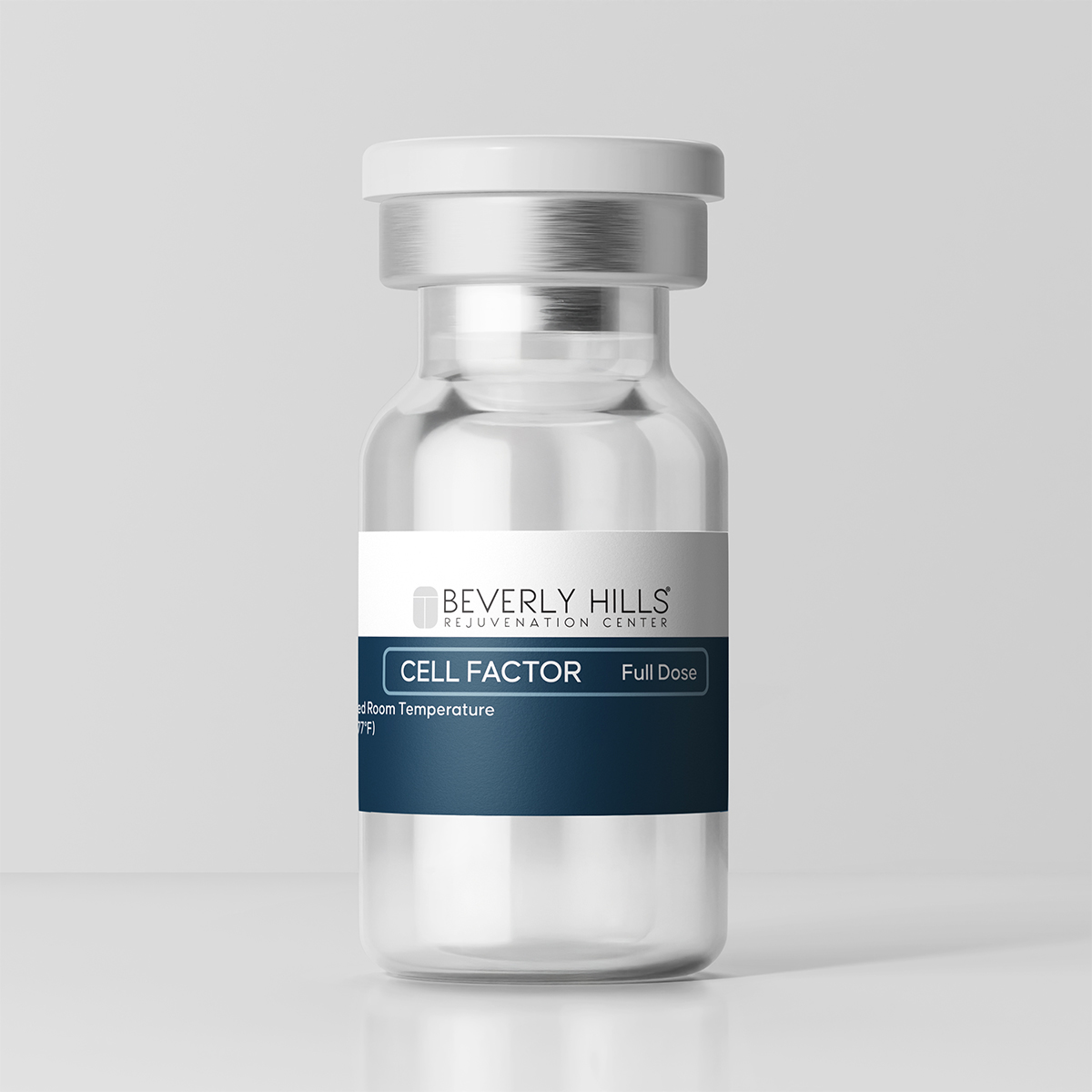
The newer category is acellular: products derived from cell culture rather than from your own body, containing growth factors and extracellular vesicles, sometimes marketed as exosomes. The biology is genuinely interesting. The regulatory position is not ambiguous.

Two clarifications that cut in different directions.
PRP is in a different regulatory bucket entirely. Blood components are explicitly excluded from the human cells and tissues framework at 21 CFR 1271.3(d)(2). What FDA regulates for PRP is the preparation device, cleared as Class II — typically for narrow orthopaedic indications such as mixing with bone graft. Using PRP for facial rejuvenation or knee osteoarthritis is off-label use of a cleared device, practiced under a physician’s clinical judgment. That is a normal and legal thing in medicine; it is simply not the same as “FDA-cleared treatment,” and any clinic saying otherwise is overstating it.
Acellular growth-factor products are not 361 tissue products. The regulation excludes “secreted or extracted human products, such as milk, collagen, and cell factors” from the tissue definition outright. A product of that description falls under the drug and biologic pathway — which is why FDA’s warning letters in this space cite section 505(a) and the Public Health Service Act rather than tissue rules.
4 · What these cost at BHRC


5 · The safety conversation nobody has
PRP itself has a good safety profile. The adverse events are pain, swelling, bruising and transient redness, with 83.6% of reported events occurring within 24–48 hours and 91.2% resolving on their own within 72 hours. Leukocyte-rich preparations carried the highest event rate at 45.2%.
The risk that actually matters is not the biologic. It is the technique.
This was not a failure of PRP as a biological agent — the virus came from cross-contamination between clients. It was a failure of licensure and equipment handling. Which is exactly why the three questions below are worth asking out loud at any clinic, and why a good one will be pleased you did:

6 · How to think about any of this

1860 S Sepulveda Blvd, Los Angeles, CA 90025
(310) 861-3748 · Monday–Friday 9:00 AM – 6:00 PM, Saturday 9:00 AM – 4:00 PM
Treatment by the BHRC clinical team
Regenerative protocols, PRP and joint injections are all available here.
Consultations are free and carry no obligation.
Frequently Asked Questions
What does PRP cost at BHRC?
At BHRC West Hollywood, $750 for a single session, $2,000 for a three-session series spaced four weeks apart, or $3,800 for six sessions. Rejuvenation Club members take 20% off. Cell Factor protocols at West Los Angeles are $1,500 a session, $4,000 for three, or from $5,500 combined.
Is PRP FDA-approved?
There is no FDA-approved PRP drug. FDA clears the devices used to prepare PRP as Class II devices, typically for narrow orthopaedic indications. Using PRP for skin or for knee osteoarthritis is off-label use of a cleared device under a physician’s clinical judgment — a normal practice in medicine, but not the same as an FDA-cleared treatment.
Are exosome products FDA-approved?
No. As of September 2026 there are no FDA-approved exosome products for any indication, and FDA has issued repeated public safety notifications, consumer alerts and warning letters on the subject — most recently a consumer warning in May 2026. The only approved stem cell products are hematopoietic progenitor cells from umbilical cord blood, for blood disorders.
Does PRP actually work for acne scars?
The evidence here is genuinely good. A 2026 meta-analysis of 17 studies and 1,111 participants found PRP combined with microneedling roughly tripled the odds of an excellent response compared with microneedling alone, with equivalent adverse event rates. The caveat is that 40% of the included trials were rated high risk of bias.
Does PRP work for knee arthritis?
Partly. Network meta-analyses rank it above hyaluronic acid and corticosteroids at six months and beyond, with improvements exceeding the minimal clinically important difference. But the largest rigorous placebo-controlled trial, RESTORE, found no significant difference from saline at twelve months. The honest summary is benefit at six months that attenuates by twelve.
Why do different clinics get different results with PRP?
Because they are often injecting different products. A study comparing three commercial preparation systems on the same donors found significantly different leukocyte counts and growth factor levels. Ask which system your clinic uses and whether the preparation is leukocyte-rich or leukocyte-poor.
Is PRP safe?
Generally yes. Reported adverse events are pain, swelling, bruising and transient redness, with most occurring within 48 hours and resolving within 72. The serious risk in this category is infection from poor technique or an unlicensed facility — which is what the 2024 CDC investigation of a New Mexico spa documented.
Who should not have PRP?
Anyone with an active infection at the treatment site or sepsis; anyone with critical thrombocytopenia or platelet dysfunction; anyone hemodynamically unstable. Relative contraindications include active malignancy, anemia with hemoglobin under 10 g/dL, recent NSAID use within 48 hours and steroid injection within two weeks.
What should I ask before a regenerative treatment?
Who manufactures the product and what the source material is; what the certificate of analysis shows; what its regulatory status actually is. And on facility standards: whether the clinic is licensed, whether single-use disposables are opened in front of you, and whether there is an autoclave on site.
What is the first step?
A free consultation. Your provider will tell you which of these has evidence behind it for your specific concern — and where the honest answer is that the research is still emerging.
Keep Reading
- PRP Therapy at BHRC
- Cell Factor at BHRC West Los Angeles
- Cell Factor Joint Therapy
- Joint Injections at BHRC West Los Angeles
- Sculptra & Dermal Fillers in West LA — Cost & Results
- Exion RF Microneedling at BHRC West Hollywood
- Acne & Acne Scars at BHRC
- Rejuvenation Club Membership
Regenerative Treatments at a BHRC Studio Near You
PRP and regenerative protocols are available at BHRC studios nationwide, including our main six. Tap your closest location to book a free consultation:
References & Further Reading
- Centers for Disease Control and Prevention / MMWR — Investigation of Presumptive HIV Transmission Associated with Receipt of Platelet-Rich Plasma Microneedling Facials at a Spa — New Mexico, 2018–2023. cdc.gov
- U.S. Food & Drug Administration — Public Safety Notification on Exosome Products, December 2019. fda.gov
- U.S. Food & Drug Administration — Consumer Alert on Regenerative Medicine Products Including Stem Cells and Exosomes. fda.gov
- U.S. Food & Drug Administration — Patient and Consumer Warning about Potential Serious Risks of Harm following Use of Unapproved Products from Human Cells or Tissues, May 2026. fda.gov
- Electronic Code of Federal Regulations — 21 CFR 1271.3 — definitions and exclusions for human cells, tissues and cellular and tissue-based products. ecfr.gov
- Archives of Dermatological Research — Afreen S et al. Combined microneedling and platelet-rich plasma for atrophic acne scars: a systematic review, meta-analysis and trial sequential analysis, 2026. link.springer.com
- Blood Transfusion — Cruciani M et al. Platelet rich plasma for facial rejuvenation: an overview of systematic reviews, 2024. bloodtransfusion.it
- Biomedicines — Vladulescu D et al. Platelet-Rich Plasma in Dermatology: Cellular and Molecular Mechanisms of Action, 2024. mdpi.com
- American Journal of Sports Medicine — Castillo TN et al. Comparison of Growth Factor and Platelet Concentration From Commercial Platelet-Rich Plasma Separation Systems, 2011. journals.sagepub.com
- Journal of Clinical and Aesthetic Dermatology — Mahmoud RH et al. Exosomes: A Comprehensive Review for the Practicing Dermatologist, 2025. jcadonline.com
- U.S. Food & Drug Administration — Warning Letter — New Life Medical Services, LLC, September 2025. fda.gov
Beverly Hills Rejuvenation Center. This content is for general education and does not create a physician-patient relationship or constitute medical advice. PRP and regenerative protocols are medical procedures performed only after individualized evaluation. There is no FDA-approved PRP drug and no FDA-approved exosome product; use of these treatments for aesthetic or orthopaedic indications is under a physician’s clinical judgment. Prices shown are current standard rates and are not a quote. Candidacy, dosing, results and pricing vary by person and are confirmed at a free consultation. Reviewed by the BHRC clinical team.