BHRC BLOG
Dihexa Dosage Guide: Protocol, Safety & Cognitive Research
BHRC Blog · Peptide Education · Nootropic & Cognitive Peptides
Dihexa Dosage Guide: Protocol, Safety & Cognitive Research
Few compounds in the peptide world come with a headline as jaw-dropping as Dihexa: a lab-made molecule that early researchers described as extraordinarily potent at building new connections between brain cells. It’s the reason Dihexa gets whispered about in nootropic forums as a possible “memory peptide.” But the full story is more complicated — and far more interesting — than the hype. This is an honest, plain-English guide to what Dihexa is, how it’s thought to work, the protocols people reference, and the very real reasons it remains strictly investigational. If you want the excitement and the fine print, you’re in the right place.
- What it is: an orally active, brain-penetrant peptide (an angiotensin IV analog) developed at Washington State University to study memory and synapse formation.
- The claim: in animal studies, it promoted the growth of new synapses and improved learning and memory.
- The catch: no human trials, contested foundational research, and a theoretical cancer-pathway concern.
- Referenced protocols: community sources cite oral micro-to-milligram doses in short cycles — but there is no established human dose.
- Bottom line: genuinely intriguing science, genuinely unproven and unregulated in humans.
1 · What Is Dihexa?
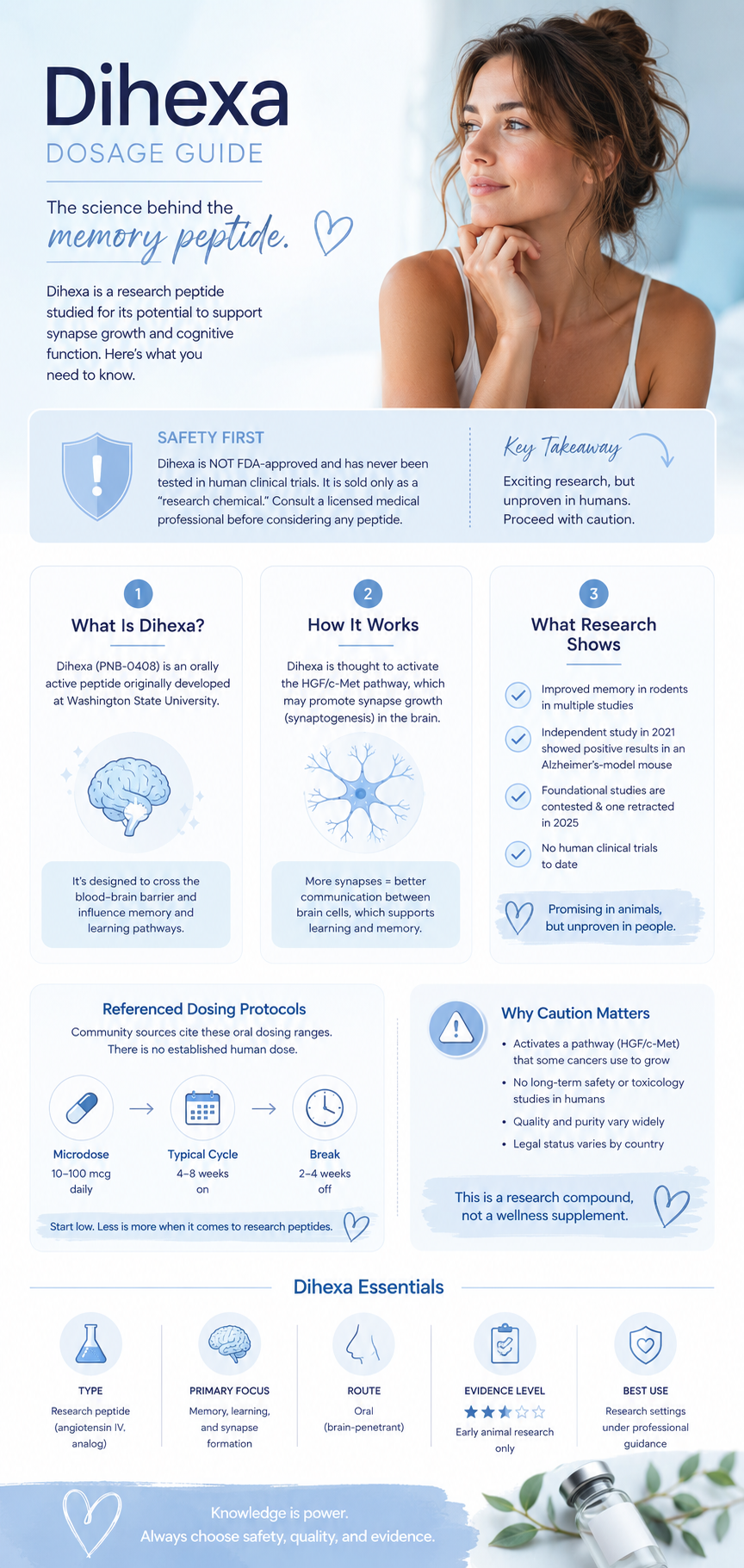
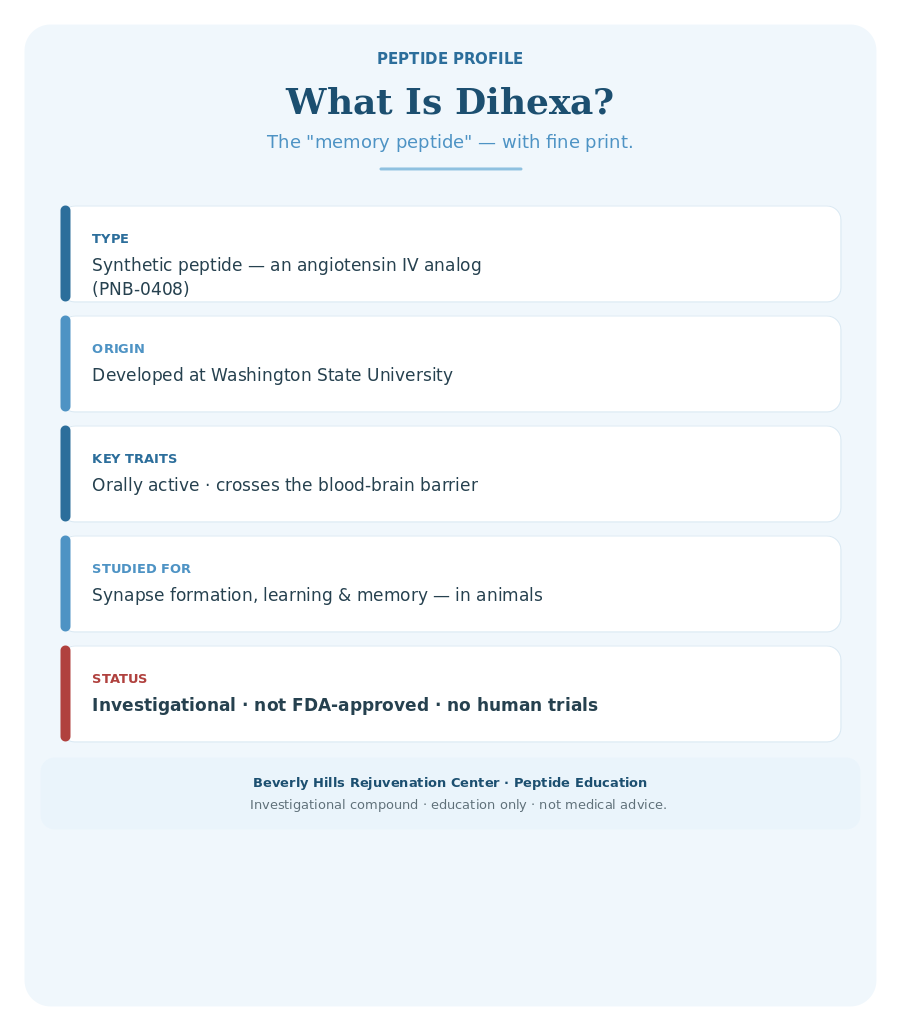
Answering the core searches — “what is Dihexa” and “what is Dihexa peptide” — Dihexa (chemical name N-hexanoic-Tyr-Ile-(6)-aminohexanoic amide; also called PNB-0408) is a small, synthetic peptidomimetic: a molecule engineered to imitate a natural one. It was created by researchers at Washington State University as a stabilized analog of angiotensin IV, a fragment of the same hormone system that regulates blood pressure — but which, in the brain, appears to influence learning and memory.
What made Dihexa stand out in early research was practicality: unlike many peptides, it was designed to be orally active and able to cross the blood-brain barrier, the tightly guarded border that keeps most molecules out of the brain. That combination — small, brain-penetrant, and aimed at memory circuitry — is exactly why it captured attention as a potential tool for studying cognitive decline.
2 · How Dihexa Is Thought to Work
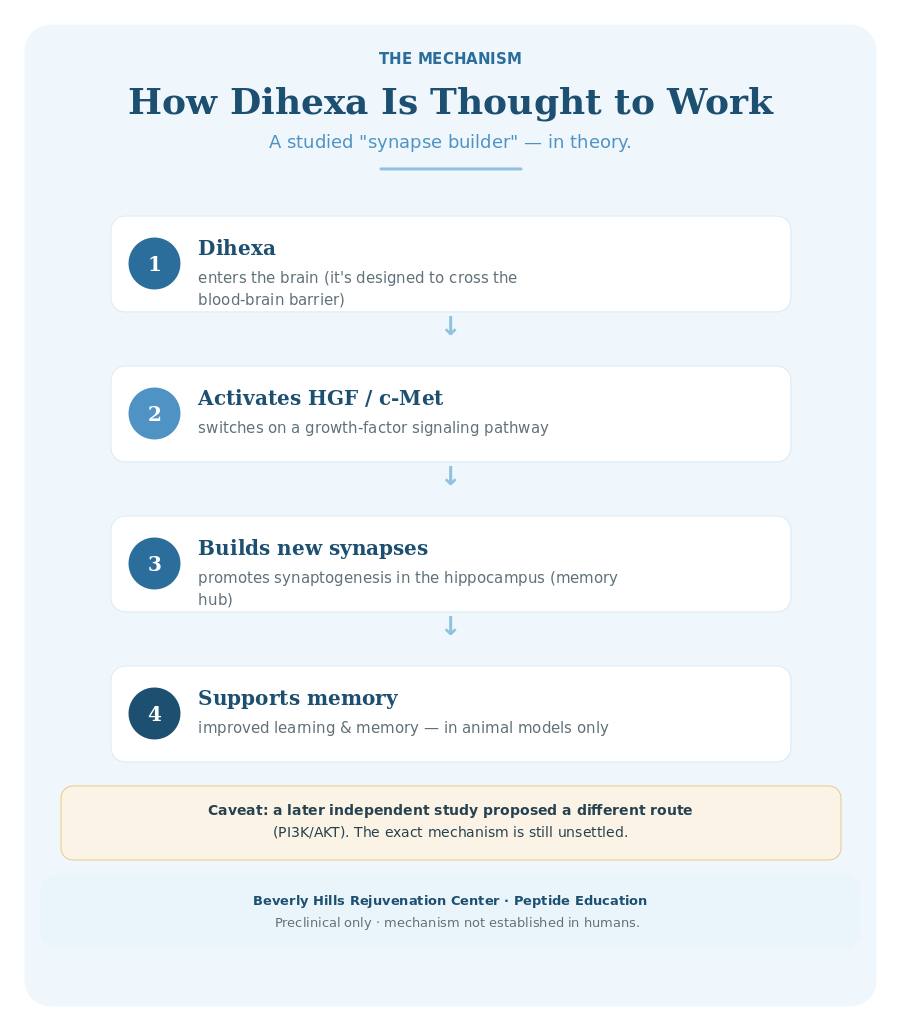
Here’s the mechanism behind “how does Dihexa work.” The brain forms memories in part by building and strengthening synapses — the connection points between neurons. Dihexa was reported to supercharge that process, a phenomenon researchers call synaptogenesis (making new synapses).
The proposed pathway involves hepatocyte growth factor (HGF) and its receptor c-Met. In the original model, Dihexa binds HGF and helps switch on c-Met, which then drives the growth of new dendritic spines and synapses in the hippocampus — the brain’s memory hub. A later independent study proposed a somewhat different route (the PI3K/AKT signaling pathway), so even the exact mechanism is still an open scientific question.
3 · What the Cognitive Research Actually Shows (and Its Caveats)
This is where honesty matters, because the internet tends to quote the flashiest number and skip the footnotes. Here’s the real state of the evidence:
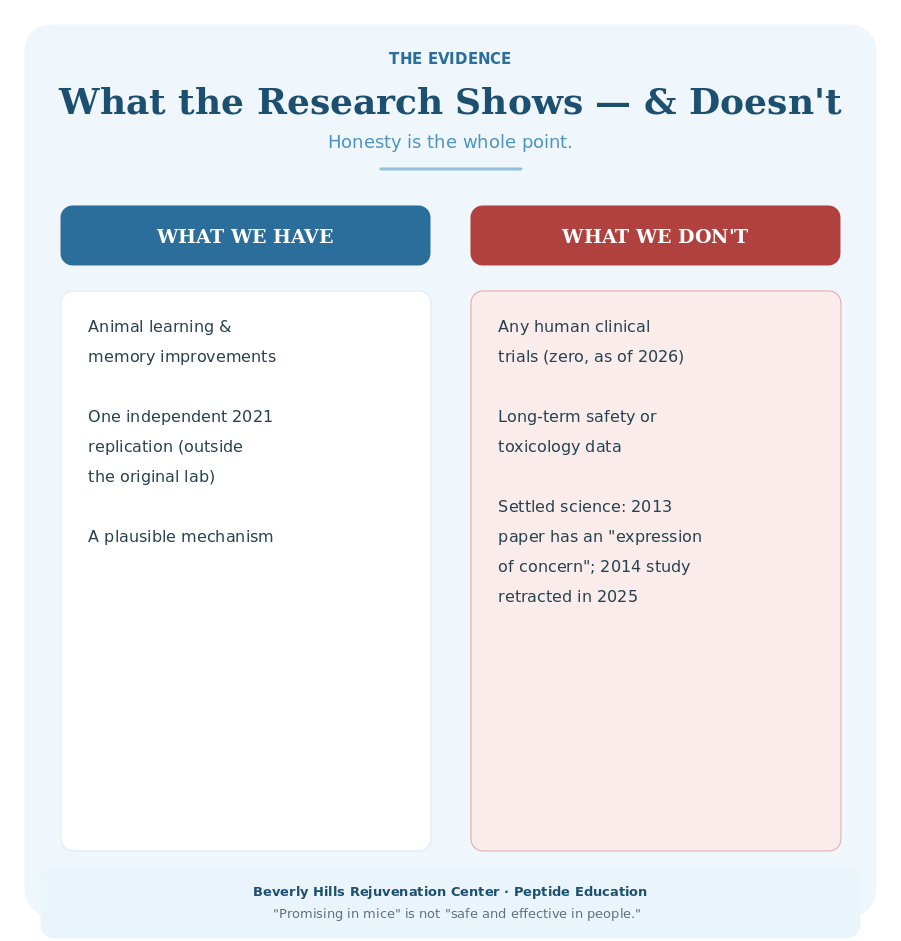
- Animal learning & memory. In rodent studies, Dihexa improved performance on memory tasks (like the Morris water maze) in rats with chemically induced cognitive deficits and in aged rats.
- Independent replication exists — but it’s thin. A 2021 study from a separate research group reported that Dihexa rescued cognitive impairment in an Alzheimer’s-model mouse, which matters because it came from outside the original lab.
- The foundational papers are under a cloud. The influential 2013 paper carries a formal “expression of concern,” and a key 2014 follow-up was retracted in 2025. That doesn’t erase the idea, but it means the evidence base is weaker and more contested than headlines suggest.
- Zero human data. As of 2026, there are no completed or ongoing human efficacy trials. Every cognition result comes from rodents (and zebrafish).

4 · Dihexa Dosage — What’s Referenced (and Why It’s Not a Prescription)
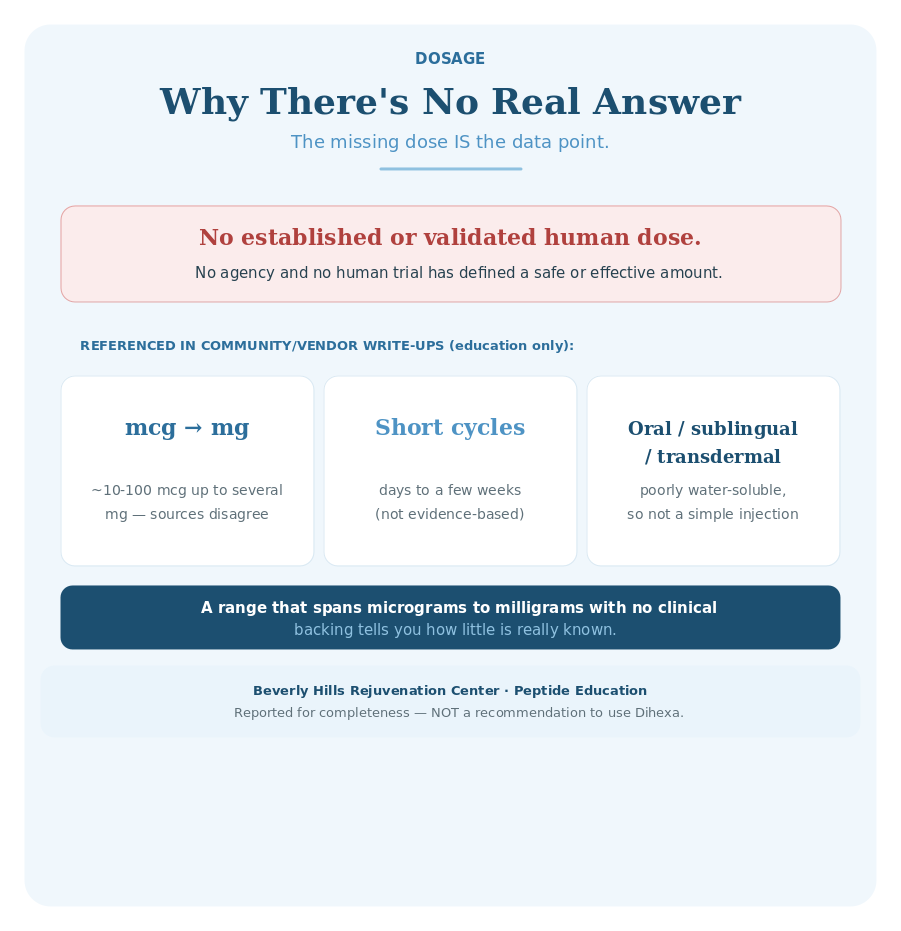
With that firmly established: because Dihexa was designed to be orally active, the ranges people reference are usually oral, in short cycles. It is also worth knowing that Dihexa is highly fat-soluble and poorly water-soluble, which is why it’s typically discussed as an oral capsule, a sublingual oil, or a transdermal preparation rather than a simple water-based injection.
| Reported route | Commonly cited range | Notes |
|---|---|---|
| Oral (capsule / oil) | ~10–100 mcg up to several mg per day, depending on the source | Sources disagree wildly; no dose is validated |
| Sublingual / transdermal | Referenced due to solubility | Absorption is not well characterized |
| Cycle length | Short courses (e.g., days to a few weeks) | Community practice, not evidence-based |
Notice how wide and vague those numbers are — they range from a few micrograms to several milligrams, a thousand-fold spread, depending on which source you read. That’s not an accident; it reflects the absence of real human dosing science. When a “dosage guide” can only offer a range that wide with no clinical backing, that itself is the most important data point.
5 · Safety, Side Effects & the Cancer-Pathway Concern
If you take one section seriously, make it this one. Searches like “is Dihexa safe” and “Dihexa side effects” deserve a candid answer: we largely don’t know, and that uncertainty is the risk.
What’s reported anecdotally
- Headaches, brain fog, or fatigue
- Irritability or mood changes
- Effects that are inconsistent from person to person
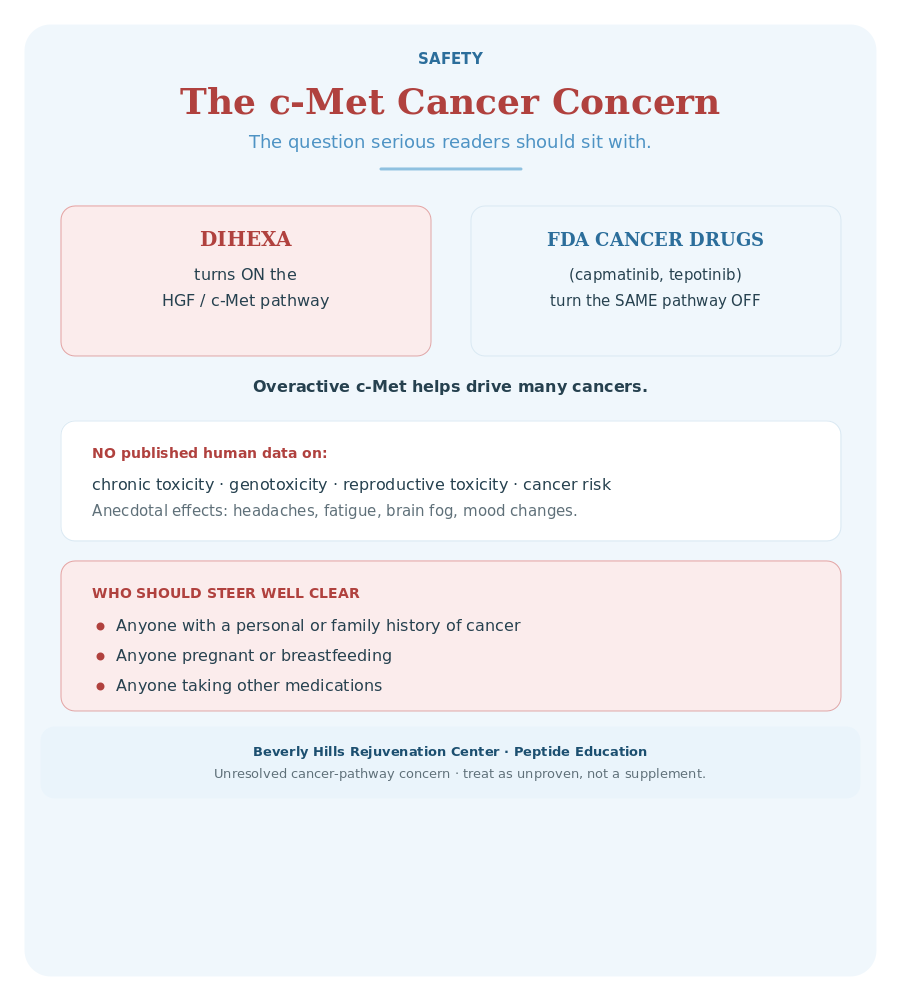
But anecdotes are not a safety profile. There is no published chronic toxicology, genotoxicity, reproductive-toxicity, or carcinogenicity data for Dihexa in humans.
The big one: c-Met activation
Here’s the concern serious readers should sit with. The HGF/c-Met pathway that Dihexa is designed to turn on is the same pathway that, when overactive, helps drive many cancers — promoting tumor growth, invasion, and spread. In fact, the FDA has approved cancer drugs (such as capmatinib and tepotinib) precisely to block c-Met. A compound that stimulates that pathway, with no long-term human safety data, raises a legitimate theoretical concern that simply hasn’t been studied.
6 · Is Dihexa Legal? Is It FDA-Approved?
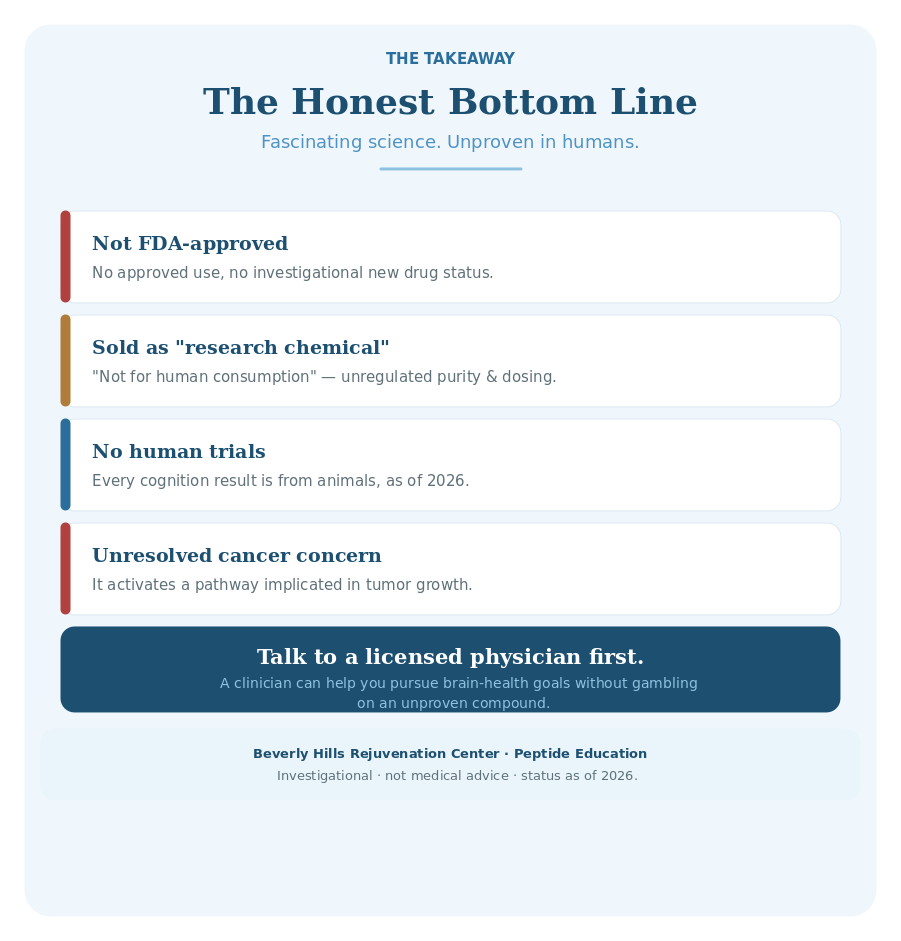
To be direct about “is Dihexa FDA-approved” and “is Dihexa legal”: Dihexa is not FDA-approved for any use, has no investigational new drug status, and is not an established medication. It is sold online as a “research chemical” / “not for human consumption,” which means purity, dosing accuracy, and sterility are unregulated and inconsistent from vendor to vendor. That labeling is a red flag, not a loophole. (Regulatory status noted as of August 2026 and subject to change.)
7 · Why “Safe Administration” Really Means “Talk to a Doctor First”
With most peptides, our advice is to prioritize medical supervision and pharmaceutical-grade sourcing. With Dihexa, the honest guidance goes a step further: because there is no human safety data and an unresolved cancer-pathway concern, the responsible move is a conversation with a physician about your goals — not a gray-market vial. A good clinic can talk you through evidence-based options for cognition, energy, and healthy aging, and help you avoid experimental compounds whose risks aren’t yet understood.

Talk with a licensed BHRC provider about options that are actually studied and supervised.
Explore Peptide Therapy at BHRC →Frequently Asked Questions
What is Dihexa?
Dihexa (PNB-0408) is a synthetic, orally active, brain-penetrant peptide developed at Washington State University as a stabilized analog of angiotensin IV. It’s studied for its reported ability to promote synapse formation (synaptogenesis) and support learning and memory in animals. It is investigational and not FDA-approved.
How does Dihexa work?
It’s thought to build new synapses in the hippocampus, the brain’s memory center. The original mechanism involved the HGF/c-Met growth-factor pathway; a later independent study proposed the PI3K/AKT pathway. The exact mechanism is still being studied and has not been established in humans.
What is the dosage of Dihexa?
There is no established or validated human dose. Community and vendor sources cite oral ranges roughly around 5–50 mg per day in short cycles, but these are not clinically supported and are reported for education only — not as a recommendation. No human trial has defined a safe or effective dose.
What are the benefits of Dihexa?
In animal research, Dihexa was reported to improve learning and memory and to promote synapse growth. However, these are preclinical findings, some of the foundational studies are contested, and none of this has been demonstrated in humans, so no benefits are established for people.
Is Dihexa safe? What are the side effects?
Its safety is essentially unknown. Anecdotal reports mention headaches, fatigue, brain fog, and mood changes, but there is no published human toxicology data. Most importantly, Dihexa activates the HGF/c-Met pathway implicated in many cancers, raising an unresolved theoretical cancer concern — so it should not be used casually, and not at all by anyone with a cancer history or during pregnancy.
Is Dihexa FDA-approved or legal?
Dihexa is not FDA-approved and has no investigational new drug status. It’s sold as a “research chemical, not for human consumption,” which means it’s unregulated for quality and dosing. Status is noted as of 2026 and can change.
Has Dihexa been tested in humans?
No. As of 2026 there are no completed or ongoing human clinical trials for Dihexa. All published cognition data comes from rodent (and zebrafish) models.
Why were some Dihexa studies retracted?
The influential 2013 paper carries a formal “expression of concern,” and a key 2014 follow-up study was retracted in 2025. A separate 2021 study from an independent group reported supportive results, but the overall evidence base is thinner and more contested than popular articles imply.
Is Dihexa a nootropic?
It’s often discussed as an experimental nootropic (cognitive-support compound) because of its animal memory data. But “experimental” is the operative word — it is not a proven or approved nootropic, and its risks are not established.
What should I use instead if I care about brain health?
Talk to a licensed provider about evidence-based approaches — sleep, exercise, cardiovascular and metabolic health, and studied, supervised therapies. A clinician can help you pursue cognitive and healthy-aging goals without gambling on an unproven research compound.
Keep Reading — Related Peptide Guides
- What Are Peptides? Peptide Therapy at BHRC
- KPV Peptide Dosage Guide: Complete Protocol for Safe Administration
- MOTS-c Dosage Guide: Complete Protocol for Safe Administration
- NAD+ Injection Dosage Guide
- CJC-1295 / Ipamorelin Dosage Guide
Dihexa & Peptide Education by Location
Prefer to talk to a provider near you about evidence-based, supervised options? Learn more at any BHRC location:
References & Further Reading
- McCoy AT, Benoist CC, Wright JW, et al. Evaluation of Metabolically Stabilized Angiotensin IV Analogs as Procognitive/Antidementia Agents. J Pharmacol Exp Ther. 2013;344(1):141-154. PMC3533412 (note: this paper is subject to a formal Expression of Concern).
- Alzheimer’s Drug Discovery Foundation — Cognitive Vitality. Dihexa: Evidence & Safety Review. alzdiscovery.org (PDF)
- U.S. Food & Drug Administration. FDA grants accelerated approval to capmatinib for MET exon 14-skipping NSCLC (an example of a c-Met–blocking cancer therapy). fda.gov
Beverly Hills Rejuvenation Center — Peptide Education Library. This educational content does not create a physician-patient relationship and is not medical advice, a diagnosis, or a recommendation to use any compound. Dihexa is not FDA-approved, has not been studied in human clinical trials, and is sold only as a research chemical; its safety and efficacy in humans are unknown, and it activates a growth-factor pathway implicated in cancer. Nothing here should be taken as encouragement to obtain or use Dihexa. Any decision about experimental compounds must be made with a licensed physician who knows your history. This content has been reviewed by the BHRC clinical team. Information current as of August 2026 and subject to change.