
BHRC BLOG
Tirzepatide vs. Semaglutide vs. Retatrutide — Dosing, Cost & Results Compared
BHRC · WELLNESS · MEDICAL WEIGHT LOSS
Every few months a new headline number appears for this drug class, each larger than the last, and the natural reading is that the biggest number wins. It is not that simple. Only one randomized trial has ever compared two of these drugs directly; everything else is separate trials with different durations, different populations and different statistical methods being placed side by side as if they were comparable. And the drug with the largest number of all cannot be prescribed. This guide sorts out what is actually known: the mechanisms, the one real head-to-head result, the full trial picture with its caveats intact, and how the choice actually gets made in a clinic.
1 · The mechanisms, in one page
All three are incretin-based. Incretins are gut hormones released when you eat; they signal the pancreas, the brain and the gut in ways that affect insulin, appetite and gastric emptying. The molecules differ in how many of those receptors they activate.

2 · The only direct comparison: SURMOUNT-5
Everything else in this article is cross-trial. This one is not, which makes it the most reliable evidence in the field.
SURMOUNT-5 was a phase 3b, open-label randomized trial published in the New England Journal of Medicine in 2025. 751 adults with obesity and without diabetes were randomized to maximum tolerated doses of tirzepatide (10 or 15 mg) or semaglutide (1.7 or 2.4 mg) for 72 weeks across 32 US sites.

Two things worth pulling out. Serious adverse events were similar — 4.8% versus 3.5% — and more patients discontinued semaglutide for gastrointestinal reasons than tirzepatide. The larger effect did not come with a worse tolerability profile in this trial.
The important caveat: the semaglutide arm used a maximum of 2.4 mg, because that was the approved ceiling when the trial ran. The 7.2 mg dose approved in March 2026 has never been compared head-to-head with tirzepatide.
3 · The full picture, trial by trial

Tirzepatide’s own ladder
Zepbound starts at 2.5 mg weekly for four weeks, then 5 mg for at least four weeks, then increases in 2.5 mg increments every four weeks or more as tolerated: 2.5 → 5 → 7.5 → 10 → 12.5 → 15 mg. Maintenance is 5, 10 or 15 mg; the maximum is 15 mg. Zepbound also carries an indication for moderate-to-severe obstructive sleep apnea in adults with obesity, at 10 or 15 mg. Mounjaro, the diabetes brand, follows the same ladder to the same 15 mg ceiling.
4 · Retatrutide — genuinely promising, genuinely unavailable
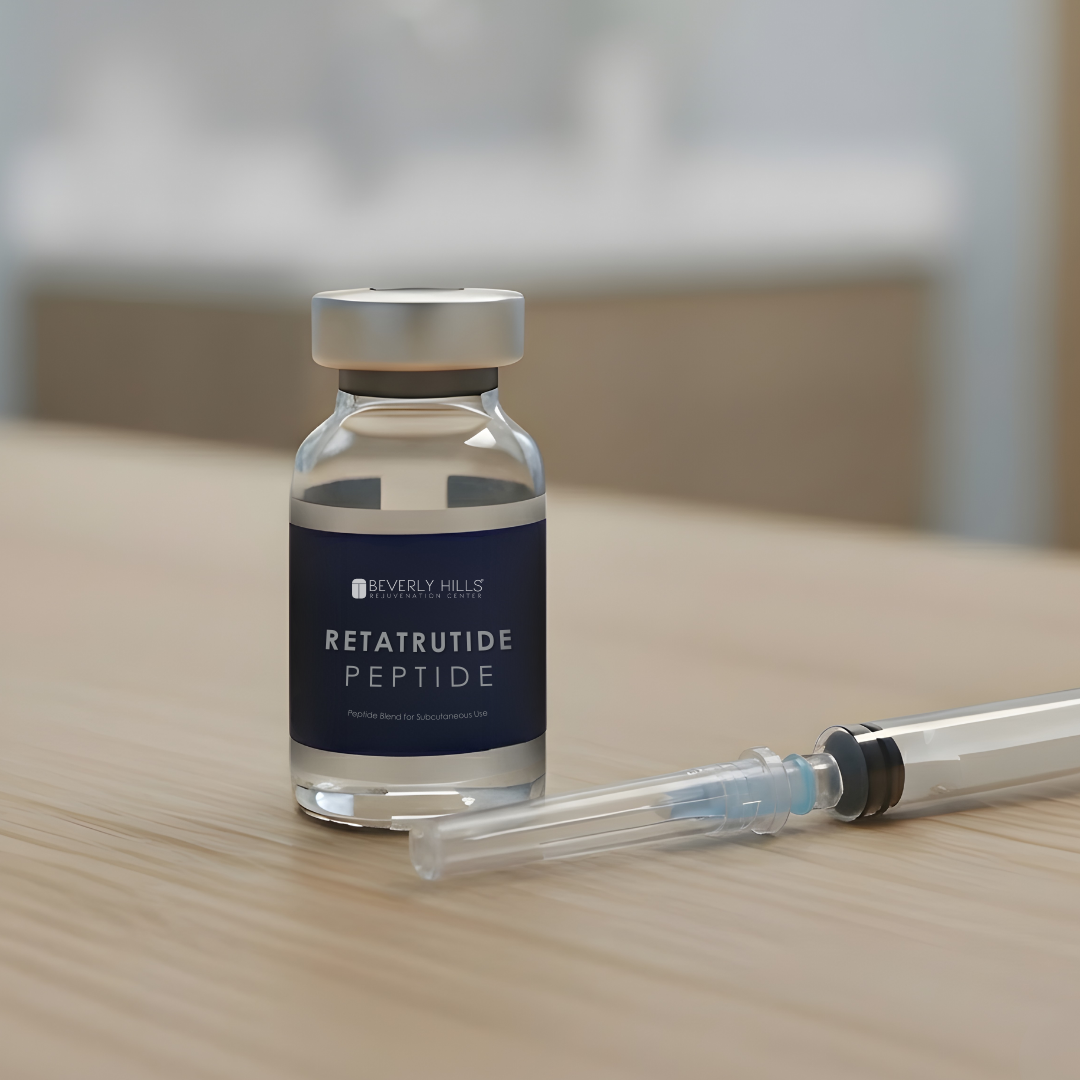
The phase 3 numbers are the largest in the field. In TRIUMPH-1, 2,339 participants over 80 weeks:

The side effect profile scales with the effect. At 12 mg versus placebo: nausea 42.4% versus 14.8%, diarrhea 32.0% versus 13.5%, vomiting 25.3% versus 4.8%, dysesthesia 12.5% versus 0.9%, and discontinuation for adverse events 11.3% versus 4.9%. Phase 2 also showed dose-dependent heart rate increases peaking at 24 weeks before declining.
5 · Side effects and the boxed warning they share
All four approved products carry the same boxed warning: risk of thyroid C-cell tumors. Semaglutide caused them in rodents and tirzepatide in rats at clinically relevant exposures; human relevance is unknown. The symptoms to report are a neck mass, difficulty swallowing, shortness of breath and persistent hoarseness.

Contraindications — identical across all four
- Personal or family history of medullary thyroid carcinoma
- Multiple Endocrine Neoplasia syndrome type 2
- Known serious hypersensitivity to the drug or its excipients
- Pregnancy, planned pregnancy or breastfeeding
6 · Muscle, regain and the questions people actually ask
Lean mass. In the SURMOUNT-1 body-composition substudy, roughly three quarters of weight lost was fat and one quarter lean tissue. In the STEP 1 substudy, fat mass fell 19.3% and lean mass 9.7% in absolute terms — but lean mass as a proportion of body weight rose 3.0 percentage points, and visceral fat fell 27.4%. That ratio is broadly what happens with any substantial weight loss. Whether the absolute lean loss causes functional decline has not been tested in a trial designed to answer it.
Stopping. In the STEP 1 extension, participants who had lost 17.3% were at 5.6% below baseline a year after stopping — roughly two thirds regained. 48.2% still maintained at least a 5% loss. Cardiometabolic improvements largely reverted.
7 · Choosing, practically

On cost, the landscape moves quarterly. As of late 2025 Novo Nordisk listed Wegovy and Ozempic self-pay at $349 a month; Lilly listed Zepbound single-dose vials from $299 depending on dose; and a government direct-purchase program brought further reductions. Check current figures with the manufacturer programs directly rather than trusting a number you read in an article — including this one.
1860 S Sepulveda Blvd, Los Angeles, CA 90025
(310) 861-3748 · Monday–Friday 9:00 AM – 6:00 PM, Saturday 9:00 AM – 4:00 PM
Treatment by the BHRC clinical team
Medical weight management is available at all six BHRC studios.
Consultations are free and carry no obligation.
Frequently Asked Questions
Which is better, tirzepatide or semaglutide?
In the only head-to-head randomized trial, SURMOUNT-5, tirzepatide produced more weight loss — 20.2% versus 13.7% over 72 weeks, with 48.4% versus 27.3% of patients reaching at least 20% loss. Gastrointestinal discontinuation was actually lower on tirzepatide. The caveat: the semaglutide arm used a maximum of 2.4 mg, and the newer 7.2 mg dose has never been compared head-to-head.
Is retatrutide available?
No. Retatrutide is investigational and not FDA-approved for any indication. Eli Lilly stated in July 2026 that it plans to submit a Biologics License Application in the first quarter of 2027. Anything sold as retatrutide today is an unapproved drug of unverified identity and purity.
How much weight did retatrutide produce in trials?
In TRIUMPH-1, a phase 3 trial of 2,339 participants over 80 weeks, mean weight loss was 28.3% at 12 mg, 25.9% at 9 mg and 19.0% at 4 mg, against 2.2% on placebo. At the top dose, 62.5% reached at least 25% loss. Side effects scaled with the effect — 11.3% discontinued for adverse events versus 4.9% on placebo.
Can I compare the trial numbers directly?
No, and this is the most common error. Only SURMOUNT-5 directly compared two of these drugs. The other trials differ in duration (64 to 80 weeks), population, comparator and statistical estimand. TRIUMPH-1 ran eight weeks longer than SURMOUNT-1, which alone accounts for part of the difference.
What are the doses?
Semaglutide as Wegovy: 0.25 → 0.5 → 1 → 1.7 → 2.4 mg weekly, with a 7.2 mg high dose approved in March 2026 for patients who tolerate 2.4 mg. Tirzepatide as Zepbound: 2.5 → 5 → 7.5 → 10 → 12.5 → 15 mg weekly, maximum 15 mg. Retatrutide has no approved dose.
Do they all have the same warnings?
The boxed warning is identical — risk of thyroid C-cell tumors, seen in rodents at clinically relevant exposures, with unknown human relevance. Contraindications are the same across all four approved products: personal or family history of medullary thyroid carcinoma, MEN 2, and known serious hypersensitivity.
Will I lose muscle?
Some lean tissue is lost alongside fat, as with any substantial weight loss. Trial substudies put it at roughly a quarter of total weight lost, with lean mass as a proportion of body weight actually improving. No trial has been powered to test whether that affects physical function.
What happens when I stop?
Most people regain a substantial amount. In the STEP 1 extension, participants who had lost 17.3% were 5.6% below baseline a year after stopping, though 48.2% maintained at least a 5% loss. Plan for the long term before you start rather than after you finish.
Is there anything I need to tell my aesthetic provider?
Yes — that you are on a GLP-1, before any procedure involving sedation. There are postmarketing reports of pulmonary aspiration under anesthesia despite reported fasting. It is on the label and it is the warning most relevant to anyone combining weight management with aesthetic treatment.
How do I choose?
At a consultation, based on your indication, your tolerance, what you can actually access, and what monitoring is in place — not by picking the largest number from a press release. Book a consultation and bring your history and current medications.
Keep Reading
- Semaglutide Dosage Chart: Full Titration Schedule Including 7.2 mg
- Medical Weight Loss Programs at BHRC
- Tirzepatide at BHRC
- Cagrilintide + CagriSema: Titration, Trial Data & How It Works
- 5-Amino-1MQ Dosage Guide: Oral Protocol & Fat-Loss Research
- SLU-PP-332: What the Evidence Actually Shows
- Advanced Diagnostic Testing
- Men’s Health at BHRC
Medical Weight Management at a BHRC Studio Near You
Physician-supervised weight management with bloodwork and ongoing dose adjustment is available at BHRC studios nationwide, including our main six. Tap your closest location to book a free consultation:
References & Further Reading
- New England Journal of Medicine / American College of Cardiology — SURMOUNT-5: Aronne LJ et al. Tirzepatide vs Semaglutide in Obesity, 2025. acc.org
- Eli Lilly — ZEPBOUND US Prescribing Information, revised 08/2026. pi.lilly.com
- Eli Lilly — MOUNJARO US Prescribing Information, revised 08/2026. pi.lilly.com
- DailyMed / U.S. National Library of Medicine — WEGOVY (semaglutide) — prescribing information, revised 06/2026. dailymed.nlm.nih.gov
- U.S. Food & Drug Administration — FDA Approves Fourth Product Under National Priority Voucher Program, Higher Dose Semaglutide, March 2026. fda.gov
- Eli Lilly — Retatrutide delivered powerful weight loss in pivotal Phase 3 obesity trial (TRIUMPH-1), 2026. prnewswire.com
- Eli Lilly — Retatrutide successful in two additional Phase 3 obesity trials; BLA planned Q1 2027. investor.lilly.com
- New England Journal of Medicine — Jastreboff AM et al. Triple–Hormone-Receptor Agonist Retatrutide for Obesity — A Phase 2 Trial, 2023. nejm.org
- Eli Lilly — SURMOUNT-1 results published in NEJM: 16.0%–22.5% weight loss with tirzepatide, 2022. prnewswire.com
- American College of Cardiology — STEP 1: Semaglutide Treatment Effect in People With Obesity. acc.org
- Diabetes, Obesity and Metabolism — Wilding JPH et al. Weight regain after withdrawal of semaglutide: the STEP 1 trial extension, 2022. pubmed.ncbi.nlm.nih.gov
- U.S. Food & Drug Administration — FDA’s Concerns with Unapproved GLP-1 Drugs Used for Weight Loss. fda.gov
Beverly Hills Rejuvenation Center. This content is for general education and does not create a physician-patient relationship or constitute medical advice. Semaglutide and tirzepatide are prescription medications provided only under medical supervision. Retatrutide is investigational, not FDA-approved, and is not prescribed or provided by BHRC. Trial figures are study averages, not a guarantee, and cross-trial comparisons do not establish treatment differences. Candidacy, dosing, results and pricing vary by person and are confirmed at a free consultation. Reviewed by the BHRC clinical team.