BHRC BLOG
What Are Lip Fillers? Types, Results, Cost & What to Expect at BHRC
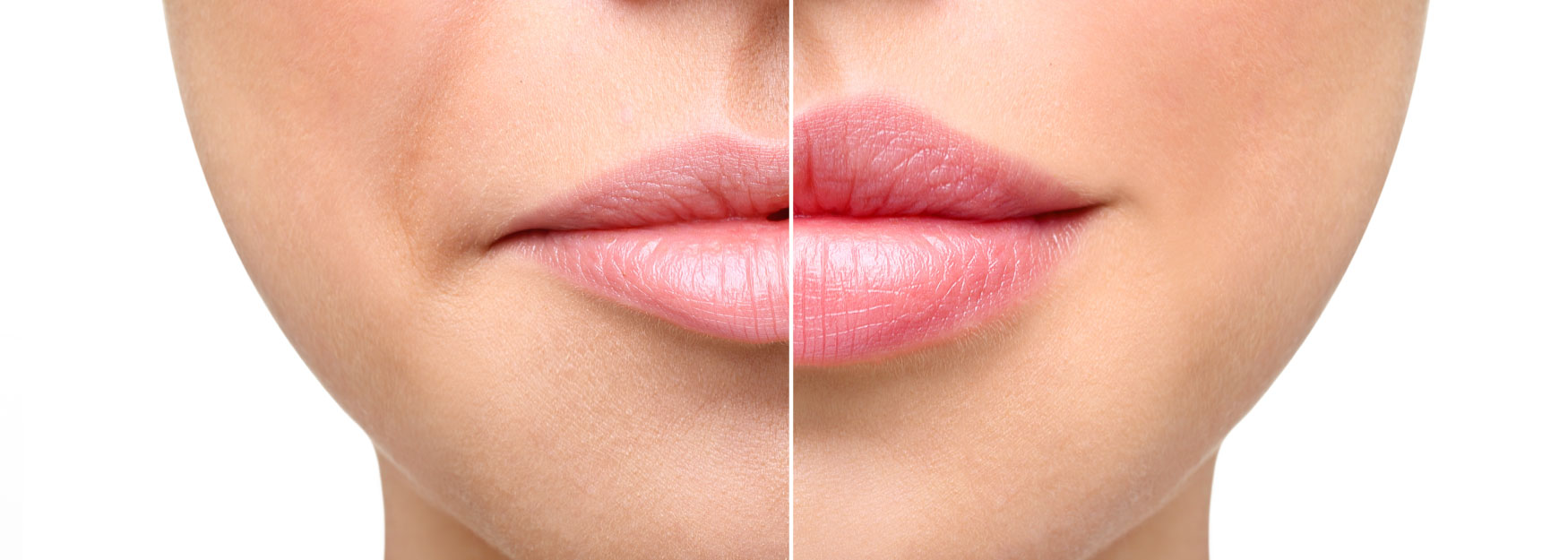
Lip fillers are injectable treatments that add volume, shape, definition, and symmetry to the lips using hyaluronic acid (HA) — a naturally occurring molecule the body already produces. Modern lip filler products are gel-like, reversible, and designed to integrate with lip tissue for a natural look and feel rather than an overfilled appearance.
FDA-cleared lip fillers available at BHRC include Juvederm Volbella XC, Juvederm Ultra XC, and Restylane Kysse — each formulated with different particle sizes and rheological properties to suit different lip goals, from subtle hydration to full volume augmentation.
What Lip Fillers Treat
- Volume loss — lips naturally thin with age as HA and collagen decrease; filler restores lost fullness without overcorrecting
- Lip border definition — the vermilion border (the line separating lip from skin) softens with age; filler sharpens the lip edge for a more defined shape
- Cupid’s bow enhancement — the upper lip’s M-shaped curve can be refined and accentuated
- Asymmetry correction — one side of the lip being fuller or higher than the other
- Perioral lines (lip lines) — vertical lines around the mouth that develop with repetitive movement and collagen loss; filler and Botox together address these most effectively
- Lip flip effect — a small amount of filler at the base of the upper lip subtly rolls it outward for a fuller appearance without dramatic volume
Types of Lip Filler at BHRC
Juvederm Volbella XC — the softest, most natural option. Best for subtle hydration, fine lip lines, and patients who want a barely-there enhancement or are new to filler.
Juvederm Ultra XC — provides more volume than Volbella. Best for noticeable lip augmentation and patients who want meaningful fullness.
Restylane Kysse — formulated specifically for lip movement. Uses XpresHAn Technology for flexibility that maintains natural lip expressiveness. Excellent for patients who are very expressive and want filler that moves naturally with their mouth.
The Lip Filler Treatment Experience
Before: Topical numbing cream is applied for 15–20 minutes before the procedure. All BHRC lip filler products also contain lidocaine — anesthetic built directly into the filler — which numbs the lip progressively as treatment proceeds. Most patients report feeling nothing after the first few injections.
During: The provider uses a combination of needle and cannula technique depending on the area being treated. Needles allow precise border definition; cannulas reduce bruising risk in more vascular areas. The full treatment takes 20–30 minutes.
After: Expect swelling and mild tenderness for 24–72 hours. The lips will look overfilled immediately — this is normal and expected. Bruising is possible and typically resolves in 3–7 days. Final results are visible at 2 weeks once swelling has completely resolved. Avoid strenuous exercise, heat, and alcohol for 24 hours post-treatment.
How Long Do Lip Fillers Last?
Lip fillers are metabolized faster than filler placed in less mobile areas. Typical longevity:
- Volbella XC: 12 months
- Ultra XC: 6–12 months
- Restylane Kysse: Up to 12 months in clinical trials
Individual metabolism, lip activity, and sun exposure all affect longevity. Patients who use SPF on and around the lips consistently tend to see longer-lasting results.
Am I a Good Candidate?
Most healthy adults are candidates for lip filler. Absolute contraindications include active infection or cold sores in the treatment area (treatment should be postponed until fully resolved), allergy to hyaluronic acid or lidocaine, and pregnancy or breastfeeding. Patients on blood thinners should discuss anticoagulant use with their provider, as bruising risk is elevated.
Patients with a history of cold sores (HSV-1) should take antiviral medication (valacyclovir) starting 2 days before and continuing 2 days after filler to prevent a herpes outbreak triggered by the injection stress.
Natural vs. Overfilled: Setting Realistic Expectations
The “overfilled duck lip” associated with early filler techniques reflects both product choice and injection approach, not lip filler in general. Modern techniques — particularly Russian lip technique, microdroplet injection, and careful vertical-to-horizontal ratio preservation — produce results that look like your lips, but better. At BHRC, providers focus on maintaining the natural lip-to-face ratio and will recommend the product and volume that achieves enhancement without distortion.
Hyaluronic acid filler is fully reversible with hyaluronidase (an enzyme that dissolves HA) — a meaningful safety net if a patient is unhappy with the result or if correction is needed.
Lip Filler at BHRC
Lip filler is available at all BHRC locations. Treatments are performed by licensed NPs, PAs, and physicians experienced in facial anatomy and injection technique. All consultations include a lip assessment and product recommendation before any filler is placed.
Frequently Asked Questions
Do lip fillers hurt?
With topical numbing and the lidocaine built into the filler itself, most patients rate discomfort at 2–3 out of 10. The initial injections are the most noticeable; subsequent passes are typically painless as the numbing takes effect.
How much filler do I need?
Most lip augmentation treatments use 0.5–1.0 mL. New patients typically start with 0.5–0.75 mL to assess how their lips respond before committing to more volume. Your provider will recommend an amount based on your starting lip size, goals, and anatomy.
Can lip filler be reversed?
Yes. Hyaluronic acid filler can be dissolved with hyaluronidase — an enzyme injected into the treatment area that breaks down the HA within 24–48 hours. This is a significant advantage over permanent or semi-permanent filler materials.
How soon can I wear lipstick after filler?
Avoid lipstick, lip liner, and any products applied directly to the lips for at least 24 hours post-treatment to minimize infection risk at the injection sites. After 24 hours, makeup can be applied normally.