BHRC BLOG
Exosomes, Explained: What They Actually Are and What the Research Really Shows
BHRC · WELLNESS · REGENERATIVE MEDICINE
Exosomes have gone from an obscure corner of cell biology to something you can find advertised on a sandwich board outside a strip-mall med spa, which is roughly the speed at which a good idea turns into a bad one. They are real, they are genuinely interesting, and the research behind them is more serious than the marketing around them deserves. Here is what an exosome actually is, what the evidence supports, what it does not, and how to tell a careful clinic from an enthusiastic one.
1 · What an exosome actually is
Start with the problem the body is solving. You have trillions of cells, and they constantly need to coordinate: this tissue is damaged, send help; this inflammation has gone on long enough, wind it down. Cells do some of that talking by direct contact, and some of it by releasing tiny membrane-wrapped packages into the surrounding fluid. Those packages are extracellular vesicles, and exosomes are the small end of that family.
Each one is a scrap of membrane wrapped around cargo — proteins, lipids, and several different types of RNA. The RNA is the interesting part. Messenger RNA carries instructions a receiving cell can actually translate. MicroRNA acts more like a set of dimmer switches, turning the activity of particular genes up or down. When an exosome fuses with a neighbouring cell, it delivers that cargo, and the receiving cell’s behaviour shifts.

The analogy that has stuck, because it is a good one: if stem cells are the car, exosomes are the GPS. The stem cell does the physical work of repair. The exosomes it releases carry much of the instruction about where that repair should happen and what form it should take. The turn-by-turn directions are the RNA.
This also explains why the field drifted toward exosomes in the first place. Researchers noticed that when stem cell treatments worked, a good deal of the benefit seemed to travel in what the cells released rather than in the cells themselves. If the message is doing the work, the reasoning went, deliver the message.
2 · Why cell-free matters
The single most useful thing to understand about exosome therapy is that it is acellular. No living cells are transplanted. That is not a marketing distinction; it is the whole regulatory and safety difference between exosome products and the stem cell clinics that have generated FDA warning letters and, in several documented cases, serious infections.
Because there are no whole cells and no complete donor DNA, the risks associated with introducing living foreign cells — off-target behaviour, unpredictable differentiation — are not part of the picture in the same way. What you are left with is a preparation that can, at least in principle, be characterised: measured, standardised, and made the same way twice.

That last point is worth dwelling on, because it is where exosome preparations differ most sharply from PRP. PRP is made from your own blood on the day of your appointment, which is elegant — but it means the quality of the product depends on your age, your health and your hydration that morning. Two patients get meaningfully different treatments under the same name. A standardised cell-free preparation does not have that problem. It has a different one, which is that you are relying entirely on the manufacturer’s characterisation being honest and rigorous.
Which is why “where did this come from and what is in it” is not a rude question. It is the only question.
3 · What the research actually shows
Here is the honest shape of the evidence, and it is a shape worth learning to recognise because it applies to most of regenerative medicine.
In the laboratory, the findings have been consistent for years: exosomes derived from mesenchymal stromal cells demonstrate anti-inflammatory, immunomodulatory and regenerative signalling properties. That is not a fringe result — it is reproduced across many groups. In animal models, the results have been encouraging across multiple models of injury and disease.
Then you reach human studies, and the picture thins. Early human work suggests potential benefit across a variety of conditions, but those studies are small, methodologically varied, and not yet the kind of large controlled trials that settle an argument. Researchers are still actively working out optimal manufacturing methods, dosing strategies, routes of administration, patient selection and long-term outcomes. Those are not footnotes. Those are the fundamentals.

None of which makes exosomes a scam. Plenty of treatments now considered routine spent years on exactly this rung of the ladder. But it does mean that a clinic promising you a specific, guaranteed outcome is making a claim the literature cannot currently support, and you should weigh that accordingly.
If you want the comparison version of this argument — exosomes set against PRP and the rest of the regenerative menu, with the cost and evidence for each — we wrote that up separately in our guide to regenerative therapies in West LA.
4 · Where exosomes are actually being used
Broadly, two places, and they are different enough that it is worth being clear which one you are asking about.
Locally. Applied to skin or scalp, usually immediately after something that has created micro-channels — microneedling, RF microneedling such as Morpheus8, or a resurfacing laser. The logic is timing: those treatments open a short window in which tissue is actively repairing, and the intent is to deliver signalling into that window. This is also the most common use in aesthetics, and the one patients most often mean when they say “exosome facial.” Scalp application for density sits here too, frequently alongside a broader hair restoration plan.
Systemically. Delivered by IV, or injected directly into a joint or soft-tissue site. This is a different conversation with a different risk profile, and it belongs inside a supervised plan with history, labs and follow-up assessment rather than as a walk-in add-on. At BHRC this runs alongside our joint injection programme.

The published literature is exploring a wider set of areas than either of those lists — joint discomfort and osteoarthritis, tendon and ligament injury, muscle and exercise recovery, chronic inflammation, recovery after orthopaedic procedures, wound healing, and skin and hair health among them. Exploring is the operative word. Research into many of these applications is ongoing and individual responses vary.
5 · The FDA question, stated plainly
There is no approved exosome drug in the United States. Not one. Any clinic implying otherwise is either confused or hoping you are.
The FDA has gone further than simply not approving them. It has issued a public safety notification specifically about exosome products, a public safety alert about the marketing of unapproved stem cell and exosome products, and a standing consumer alert on regenerative medicine products. Those documents exist because patients have been harmed — most notably in a cluster of serious bacterial infections traced to unapproved exosome products administered at a clinic in Nebraska in 2019.
A provider handling this properly will say all of the above to your face, put it in the consent form, and not flinch when you ask about it.

6 · How to judge a clinic’s exosome claims
Most of what separates a careful practice from an opportunistic one is visible in the first fifteen minutes, if you know what to listen for.

Two more things worth noticing, both of which are about ordering rather than content. The first is whether an assessment happens before a package is sold. If the sequence is pay, then evaluate, the evaluation is decoration. The second is whether anyone asks about your medical history in any depth — active malignancy, a significantly immunocompromised state or an active systemic infection are all reasons to postpone or avoid regenerative treatment, and a clinic that does not ask is not looking.
Finally, be a little suspicious of superlatives. A preparation being described as more potent than everything else on the market, with no published head-to-head comparison behind the claim, is a marketing statement wearing a lab coat. The honest version of the pitch is considerably duller: this is a promising area with strong preclinical support, early human data, and a real chance it helps.
1860 S Sepulveda Blvd, Suite 101, Los Angeles, CA 90025
(310) 861-3748 · Monday–Friday 10:00 AM – 6:00 PM
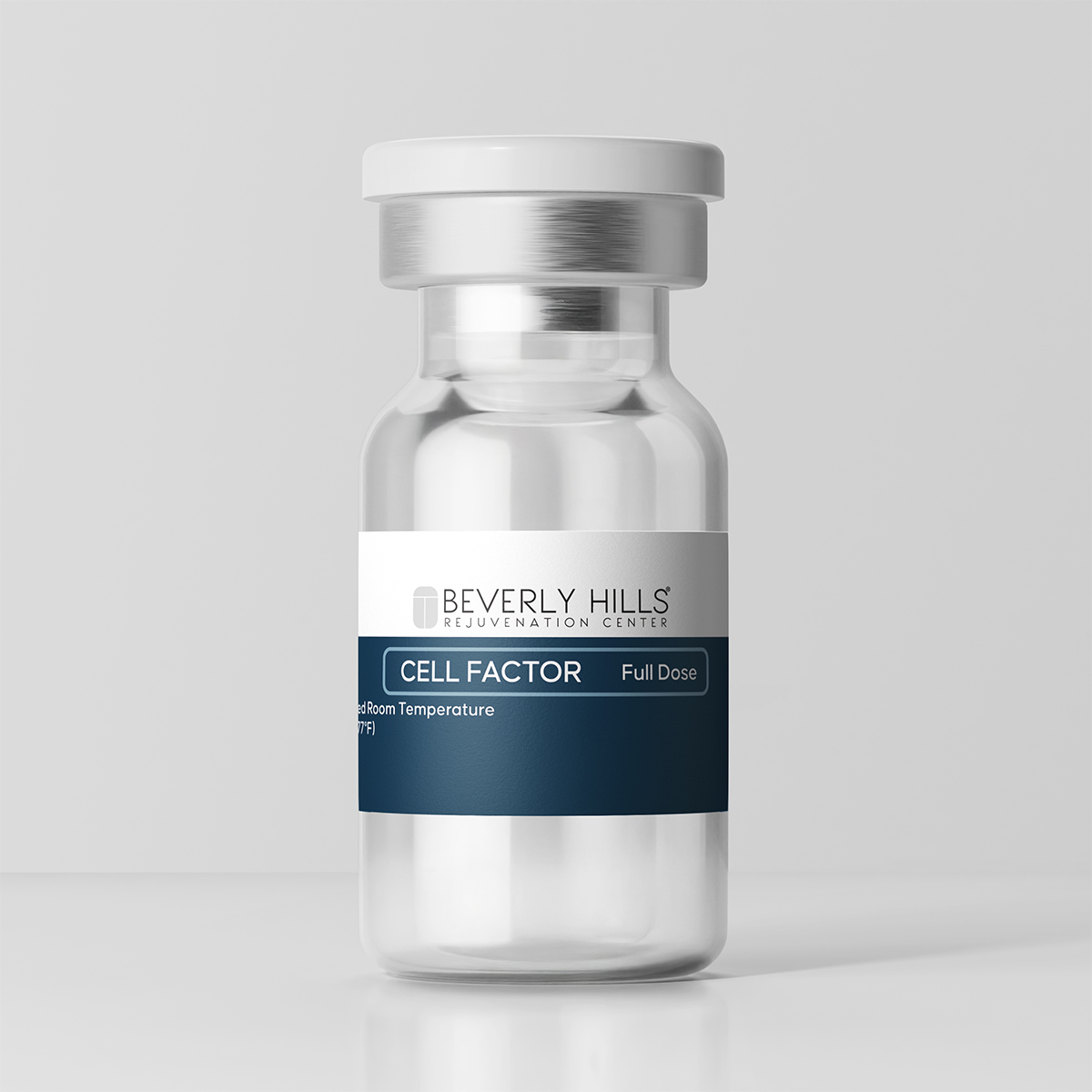
Cell Factor and exosome protocols, PRP, joint injections and IV therapy are all available at this location.
Consultations are free and carry no obligation. Full details on our West LA Cell Factor and exosome therapy page.
Frequently Asked Questions
What are exosomes, in one sentence?
Tiny membrane-wrapped packages, 30 to 150 nanometres across, that cells release to send proteins and RNA to other cells — effectively the body’s own messaging system for coordinating repair and inflammation.
Are exosomes the same as stem cells?
No, and the difference is the point. Stem cell therapy transplants whole living cells. Exosome therapy delivers signalling molecules with no cells and no complete donor DNA. They carry different risks and sit in different regulatory territory.
Is exosome therapy FDA-approved?
No. There is no FDA-approved exosome product in the United States, and the FDA has issued a public safety notification specifically about exosome products as well as a broader alert about unapproved stem cell and exosome marketing. Exosome protocols are used at the discretion of licensed providers, which is a different thing from approval.
Does the research actually support exosome therapy?
Partly, and it depends what you mean. Laboratory evidence is consistent and animal evidence is encouraging. Human evidence is early — small studies, varied methods, and no large controlled trials yet. Manufacturing, dosing and patient selection are all still open questions in the literature.
What is an exosome facial?
Usually a treatment that creates micro-channels in the skin — microneedling, RF microneedling or a resurfacing laser — followed immediately by topical application of an exosome preparation, with the aim of delivering signalling while the skin is actively repairing. The exosome part adds essentially no downtime of its own beyond whatever the underlying treatment involves.
Can exosomes help with hair thinning?
It is one of the more common uses, typically injected into the scalp, often alongside PRP and medical management rather than on its own. Changes are judged over three to six months, not weeks, and no honest provider will guarantee a result.
What is IV exosome therapy?
A systemic route — delivered intravenously rather than into skin or a specific joint — used inside broader longevity, recovery and pain-management plans. It carries a different risk profile from topical use and should involve history, labs and follow-up assessment.
Is there downtime?
Very little from the exosome component itself. Topical application adds essentially none. Scalp and joint injections may leave tenderness for a day or two. Systemic IV protocols occasionally produce mild flu-like fatigue in the first 24 to 48 hours.
Who should not have exosome therapy?
Anyone with an active malignancy, a significantly immunocompromised state or an active systemic infection, and anyone pregnant or breastfeeding. A full medical history should be taken before any protocol, and lab work before any systemic one.
What does exosome therapy cost at BHRC?
Pricing depends on the protocol and the location, and it is listed on the treatment pages rather than here so it stays current — see our Cell Factor overview or your nearest location page. Consultations are free everywhere.
Keep Reading
- Regenerative Therapies in West LA — PRP, Exosomes and What the Evidence Says
- Cell Factor & Exosome Therapy in West Los Angeles
- Cell Factor at BHRC — the full treatment overview
- PRP Therapy in West Los Angeles
- Joint Injections & Non-Surgical Pain Management in West LA
- Morpheus8 RF Microneedling in West Los Angeles
- Hair Restoration in West Los Angeles
Regenerative Treatments at a BHRC Studio Near You
Exosome and Cell Factor protocols, PRP, joint injections and IV therapy are offered across our California, Nevada and Arizona locations. Consultations are free at every one.
References & Further Reading
- U.S. Food & Drug Administration — Public Safety Notification on Exosome Products. fda.gov
- U.S. Food & Drug Administration — Public Safety Alert Due to Marketing of Unapproved Stem Cell and Exosome Products. fda.gov
- U.S. Food & Drug Administration — Consumer Alert on Regenerative Medicine Products Including Stem Cells and Exosomes. fda.gov
- Kalluri R, LeBleu VS. The biology, function, and biomedical applications of exosomes. Science, 2020. science.org
- Théry C, Witwer KW, et al. Minimal information for studies of extracellular vesicles 2018 (MISEV2018). Journal of Extracellular Vesicles, 2018. doi.org
- Ferguson SW, Nguyen J. Exosomes as therapeutics: the implications of molecular composition and exosomal heterogeneity. Journal of Controlled Release, 2016. doi.org
- Bairamzadeh M, et al. Role of mesenchymal stem cell-derived exosomes in the regeneration of different tissues. Journal of Biological Engineering, 2024.
- Mussin M, et al. Mapping the landscape of mesenchymal stem cell-derived extracellular vesicles. Stem Cells International, 2025.
- Wang D, et al. Therapeutic effect of mesenchymal stem cells and their derived exosomes in diseases. Molecular Biomedicine, 2025.
- Sgaglione J, et al. Clinical status of exosomes: a review. Cell Transplantation, 2025.
Beverly Hills Rejuvenation Center. This content is for general education and does not create a physician-patient relationship or constitute medical advice. Exosome and cell-signalling products are not approved by the FDA for the uses described here, and many applications remain investigational. Nothing here is intended to diagnose, treat, cure or prevent any disease. Individual results vary. Speak with a licensed provider about your own circumstances before making any treatment decision.