BHRC BLOG
NAD+ vs. NMN vs. NR: Dosage, Absorption & What the Human Evidence Supports
NAD+ · Precursors, Infusions & the Evidence
Both precursors raise NAD+ in your blood. Neither has been shown to raise it in your muscle. That gap is the whole story — and almost nobody selling this will tell you about it.
1. What NAD+ is, and why three products exist
Nicotinamide adenine dinucleotide — NAD+ — is a coenzyme every cell uses. It shuttles electrons through energy metabolism and it is the substrate for two families of enzymes that get a lot of attention in longevity research: the sirtuins and PARPs. Tissue NAD+ declines with age in multiple species. That observation is what launched an industry.
You cannot usefully swallow NAD+ itself — it is a large, charged molecule. So supplements supply precursors that cells convert. Nicotinamide riboside (NR) and nicotinamide mononucleotide (NMN) are the two that dominate the market. Clinics also offer IV NAD+, which bypasses the gut entirely.

2. The regulatory picture, corrected
This is where most articles are out of date, so it is worth being precise.
NMN. In November 2022 the FDA concluded NMN was excluded from the dietary supplement definition under the drug-preclusion clause, because it had been authorized for investigation as a new drug. That determination stood for nearly three years. On 29 September 2025 the FDA responded to citizen petitions (docket FDA-2023-P-0872), dropped its requirement that prior supplement marketing have been “lawful,” found NMN had been marketed as a supplement before the drug-investigation authorization, and concluded NMN is not excluded. Reinstatement letters to new dietary ingredient holders followed on 2 December 2025. NMN is a lawful dietary ingredient today.
NR. NR’s paperwork has been settled far longer: new dietary ingredient notifications in 2015 and 2018, and a GRAS notice (GRN 000635) that drew an FDA “no questions” letter on 3 August 2016. It also carries a positive EFSA novel-food opinion and EU authorization.
3. What the human trials actually measured
Here is the part that matters. Both precursors raise NAD+ in blood. That finding is real and replicated. What happens downstream is much less settled.

Three of those deserve a footnote that marketing copy tends to leave out.
Dollerup 2018 is the best-powered metabolic trial in the set — 40 men, 1000 mg NR twice daily for 12 weeks, with a hyperinsulinemic-euglycemic clamp as the endpoint. It found no improvement in insulin sensitivity, endogenous glucose production, glucose disposal, energy expenditure, fat oxidation or body composition. The supplement was safe. It just did not do the thing.
Yoshino 2021 — the NMN trial everyone cites — did find improved muscle insulin sensitivity. It also drew a formal published Comment in Science noting a baseline randomization imbalance: hepatic lipid was 6.3% in the NMN arm versus 14.8% in placebo. The authors responded that baseline muscle insulin sensitivity was matched. Both documents are in the literature, and an honest summary mentions the exchange.
Katayoshi 2023 is the one that gets quoted least and deserves the most attention: serum NAD+ and NMN were below the limit of quantification even on 250 mg daily for 12 weeks, and the primary arterial-stiffness endpoint was not significant. The study was funded by the supplement manufacturer.
4. Blood is not muscle — the finding that reframes everything
“There is no indication that oral NR increases muscle NAD+ levels” in humans — despite reliably raising it in whole blood.
That conclusion comes from a 2023 review in Science Advances by Damgaard and Treebak, which is the most rigorous synthesis of this literature available. The same review notes that NR “did not improve muscle function, satellite cell response, or the histological appearance of the muscles after injury,” and says plainly that there is “an unfortunate tendency in the literature to exaggerate the importance and robustness of reported effects.”
This is the crux. Every “NAD+ levels increased 60%” headline you have seen is measuring a blood compartment. Whether that translates into the tissues people actually care about — muscle, brain, liver — has not been demonstrated in humans.

5. IV NAD+ — what is known, and what is tolerability rather than efficacy
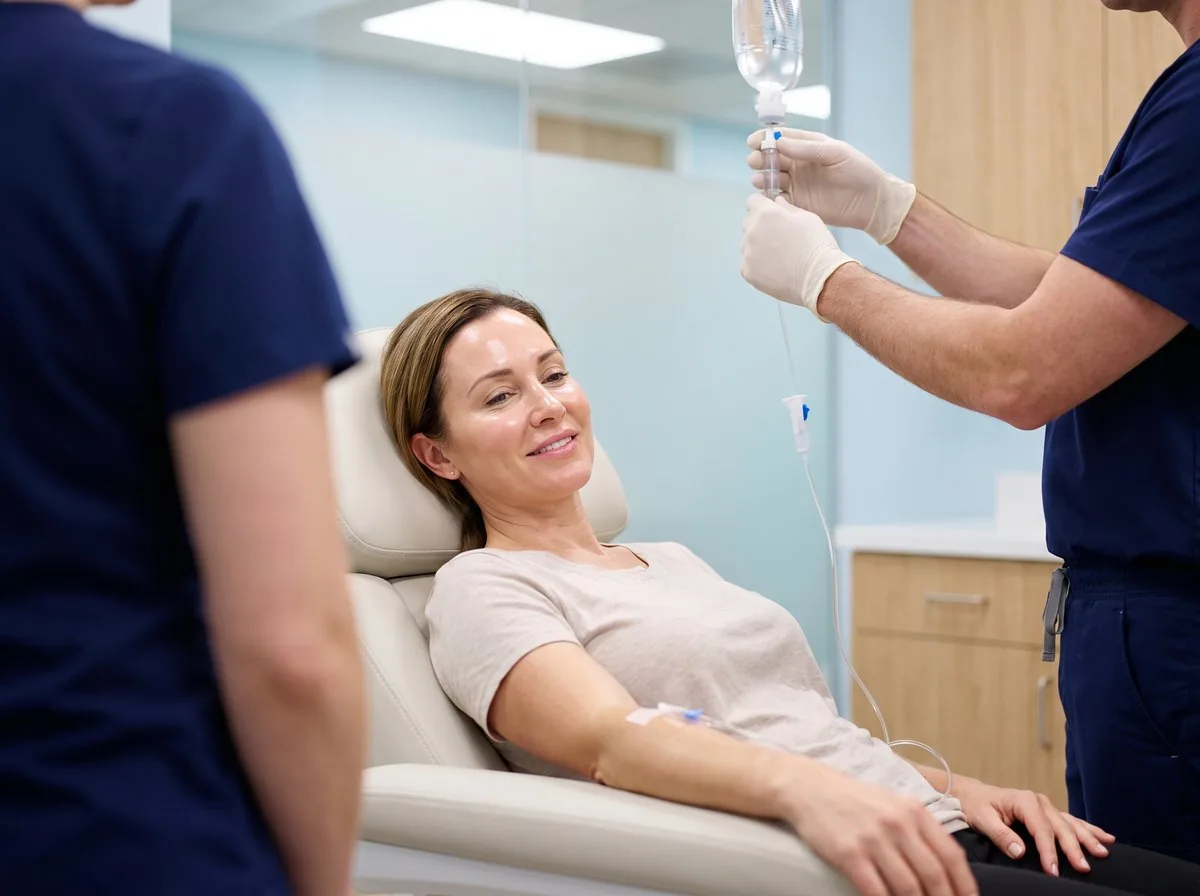
The published human record for intravenous NAD+ is thin. The main citable study is a 2019 pilot in Frontiers in Aging Neuroscience: eleven men, 750 mg NAD+ infused over six hours, saline-controlled. Plasma NAD+ did not change at all for the first two hours, then rose substantially by hour six. No adverse events were observed. It was a pharmacokinetic and metabolomic study — there was no clinical efficacy endpoint at all.
That is essentially the whole peer-reviewed human efficacy literature for IV NAD+. A 2023 systematic review concluded the evidence across routes is limited and heterogeneous. A randomized head-to-head comparison of IV NR versus IV NAD+ exists but is a preprint, is manufacturer-funded with company employees as authors, and should be cited with both of those facts attached.
Subcutaneous NAD+ injection deserves the bluntest statement in this article: we could find no published human pharmacokinetic study, no randomized trial and no completed registered trial of subcutaneous NAD+. Any milligram-and-schedule protocol circulating online for SC NAD+ is empirical — it was not derived from published human pharmacology. If a clinic presents one as evidence-based, ask them for the citation.
6. So what would a defensible approach look like?
We are not going to publish a dosing chart for something whose tissue-level effects have not been demonstrated. What we can do is describe how the doses in the actual trials were structured, so you can read a product label critically.

A reasonable, honest framing for someone interested in this category:
- Expect a biomarker change, not a felt transformation. The replicated finding is a blood NAD+ increase. Vitality, cognition and metabolic endpoints have not followed reliably.
- Prefer the product with the cleanest paperwork and a real NDI or GRAS record behind the specific ingredient you are buying.
- Treat IV NAD+ as an experience with a known side-effect profile and no outcome evidence — which is a legitimate thing to choose, as long as it is chosen with eyes open.
- Do the boring things first. Sleep, resistance training and protein intake have far better evidence for the outcomes people are chasing here than any NAD+ product does.
7. Where NAD+ actually sits in a longevity plan
The interventions with the strongest human evidence for the outcomes people come to us about — energy, body composition, function with age — are unglamorous: correcting a genuine hormone deficiency, treating undiagnosed sleep apnea, resistance training, and protein sufficiency. NAD+ precursors are a reasonable adjunct for someone who is already doing those things and wants to add something with a plausible mechanism and a good safety record. They are a poor substitute for someone who is not.
If you want to know where you actually stand before spending money on any of it, that is what advanced lab testing is for. Our longevity program is built around measuring first.
1825 Festival Plaza Dr #180, Las Vegas, NV 89135
(725) 525-6821 · Monday–Friday 9:00 AM – 7:00 PM, Saturday 9:00 AM – 4:00 PM
Treatment by the BHRC clinical team
5.0 stars across 167 verified reviews
NAD+ therapy and IV drip therapy are offered here.
Consultations are free and carry no obligation.
Questions we get asked
Is NMN legal to sell as a supplement in the US?
Yes. The FDA’s 2022 exclusion determination was reversed on 29 September 2025, and new dietary ingredient status was reinstated to notification holders on 2 December 2025. A marketer still needs its own NDI notification or a supplier that has one.
Is NMN better than NR?
The evidence does not support a clear winner. NR has more replicated blood-NAD+ data and a longer regulatory track record; NMN has a positive muscle-insulin-sensitivity trial that also has a published methodological criticism attached to it. Neither has been shown to raise NAD+ in human muscle tissue.
Does IV NAD+ work better than taking a pill?
IV raises plasma NAD+ more than oral does. Whether that produces a clinical benefit has not been shown in any published outcome trial, for either route. The honest comparison is between two things with the same amount of outcome evidence: none.
Why do I feel flushed and nauseated during the infusion?
That is the dose-limiting side effect and it is well documented — gastrointestinal symptoms, increased heart rate and chest pressure are all reported. It is why NAD+ infusions are run slowly. Tell your nurse; the rate can be reduced.
What about NAD+ nasal sprays and patches?
There is no published human pharmacokinetic data supporting systemic delivery by either route. Treat absorption claims for those formats as unsubstantiated.
Should I take NAD+ precursors if I’m on other medications?
Bring your full medication list to a consultation. NAD+ precursors have a good safety record in trials, but trial populations are healthy volunteers, and that is not the same as everyone.
Keep reading
- NAD+ — the peptide and IV protocols we offer
- NAD+ therapy at BHRC Summerlin
- IV drip therapy in Las Vegas — what’s in each bag
- The BHRC longevity program
- Advanced lab testing — measuring before treating
- What are peptides, actually?
- Epitalon dosage guide and the longevity research
Book at any of our six locations
References
- U.S. Food and Drug Administration — Response to citizen petition on NMN, docket FDA-2023-P-0872, 29 September 2025. regulations.gov
- U.S. Food and Drug Administration — Agency response letter, GRAS notice GRN 000635 — nicotinamide riboside chloride. fda.gov
- Damgaard MV & Treebak JT — What is really known about the effects of nicotinamide riboside supplementation in humans. Science Advances 2023;9(29):eadi4862. ncbi.nlm.nih.gov
- Martens CR et al. — Chronic nicotinamide riboside supplementation is well-tolerated and elevates NAD+ in healthy middle-aged and older adults. Nature Communications 2018;9:1286. nature.com
- Dollerup OL et al. — A randomized placebo-controlled clinical trial of nicotinamide riboside in obese men. Am J Clin Nutr 2018;108(2):343–353. doi.org
- Yoshino M et al. — Nicotinamide mononucleotide increases muscle insulin sensitivity in prediabetic women. Science 2021;372(6547):1224–1229. science.org
- Katayoshi T et al. — NAD metabolism and arterial stiffness after long-term NMN supplementation: a randomized, double-blind, placebo-controlled trial. Scientific Reports 2023;13:2786. nature.com
- Grant R et al. — Changes in the human plasma and urine NAD+ metabolome during a 6-hour intravenous infusion of NAD+. Frontiers in Aging Neuroscience 2019;11:257. frontiersin.org
- U.S. Food and Drug Administration — Pharmacy Compounding Advisory Committee briefing document — nicotinamide adenine dinucleotide (NAD+), 2017. regulations.gov
- Cornell Legal Information Institute — 21 CFR § 216.23 — bulk drug substances that may be used to compound under section 503A. law.cornell.edu
Beverly Hills Rejuvenation Center. This content is for general education and does not create a physician-patient relationship or constitute medical advice. NAD+ is not an FDA-approved drug and appears on neither FDA compounding bulks list. NMN and NR are regulated as dietary ingredients, not as drugs, and are not intended to diagnose, treat, cure or prevent any disease. Candidacy, dosing, results and pricing vary by person and are confirmed at a free consultation. Reviewed by the BHRC clinical team.